

In 1979, I experienced what I now recognise as my first conscious encounter with Nigeria’s electoral process. I can still name the key players: the National Party of Nigeria (NPN), Nigeria’s Peoples Party (NPP), Unity Party of Nigeria (UPN), Great Nigeria Peoples Party (GNPP), the Peoples Redemption Party (PRP), and later, the National Action Party (NAP). But what truly captivated my young imagination were the iconic figures contesting the presidency, Chief Obafemi Awolowo, Owelle Nnamdi Azikiwe, and Mallam Aminu Kano. These were not merely politicians; they were the very statesmen I was studying in my primary school social studies classes, brought to life on the campaign trail.
Living in Lagos, then a stronghold of the UPN, I vividly recall sneaking away from home to an evening rally at the Benedict Square playground in Surulere. In later years, I witnessed the near-spiritual veneration of Chief Awolowo, rumours swirled that his face was engraved on the moon. And yes, some nights I looked up and would have sworn I saw him there. That is the spell campaigns once cast, even on a young mind.
The Jakande Model: A Case Study in Human Capital Development
The years 1979 to 1983, which culminated in the second round of general elections, were formative for me. I graduated from primary school in 1981 and entered secondary school under the UPN’s free education program, with Governor Lateef Jakande at the helm of Lagos State. I remember with excitement entire primary schools being relocated into newly created secondary schools—later affectionately nicknamed “poultry” schools because of their functional, no-frills construction: corrugated roofs, blocks around poles, rows of classrooms without windows. These structures, built on existing school grounds, newly acquired open spaces, and former community playgrounds, gave countless pupils, myself included, a fighting chance at secondary education.
What strikes me most in retrospect is that Governor Jakande was not merely governing—he was living out his party’s campaign promises. Free education, affordable healthcare, accessible housing. The establishment of new schools, the recruitment of qualified teachers from Ghana and India, the founding of Lagos State University to expand university access.
Beneath all this was a deliberate, strategic resolve: to make life better for residents and to invest in human capital development for a future still haunted by colonial rule, independence struggles, post-independence governance crises, military coups, a civil war, and deep ethno-religious contestations for power.
The Cost of Truncation: From 1983 to the June 12 Crisis
That strategic vision, however, was brutally truncated. The highly contested and allegedly fraudulent 1983 general elections in the south-west saw the UPN lose multiple gubernatorial seats to the ruling NPN. The ensuing conflicts, and the military’s return on New Year’s Eve 1984, brought the democratic experiment of 1979–1983 to an abrupt end; ushering in another fifteen years of military rule, from 1984 to 1999.
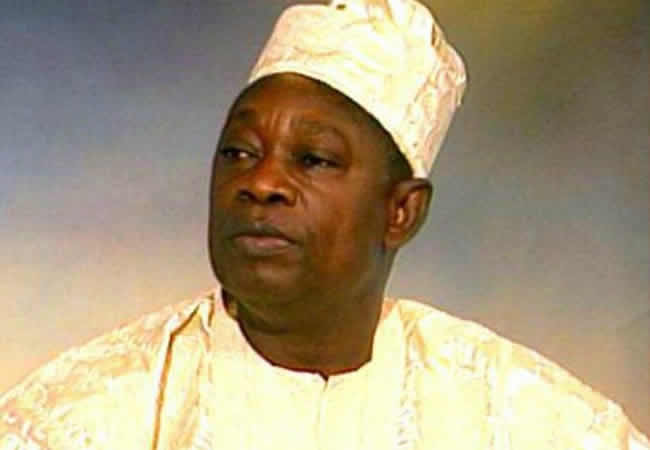
Remarkably, the military later midwifed a staggered return to democracy, beginning in 1991 with the establishment of subnational governments and a national legislature, all meant to culminate in the presidential election of June 12, 1993. That date is now etched into Nigeria’s political soul—not merely as a date, but as a rallying cry for democratic activism. It remains a haunting reminder of how an annulled election can spiral into national and international crisis, and how it permanently redefined what democratic practice must mean for Nigerians.


As history records, the June 12, 1993 presidential election, widely believed to have been won by the late Moshood Kashimawo Abiola of the Social Democratic Party (SDP), was annulled through a series of convoluted judicial and military council decisions. The annulment snowballed into a political crisis, producing an interim national government and eventually an extended military return.
That dark chapter only ended with the death of General Sani Abacha in June 1998, who had dissolved all existing democratic structures. His successor, General Abdulsalam Abubakar, orchestrated a speedy return to democratic rule in about a year, giving birth to Nigeria’s Fourth Republic—our longest and most enduring democratic experience to date.
The Contemporary Crisis: Vision Deficits and Governance Challenges
Yet, after all these years of “stable” democracy, Nigeria remains trapped in familiar struggles and emerging governance nightmares. Insecurity now threatens to erode citizens’ belief in the state’s capacity to protect lives and property. But perhaps the most troubling failure is the profound inconsistency with which successive governments have approached the strategic, long-term work of fixing the future. We lack deliberate, cohesive national agendas woven into development plans, policies, and a genuine collective sense of citizenry and national unity.
A Call to Institutionalise Hope
Fixing the future today demands a revival of Nigerian democratic practice—one that reflects both global standards and our own peculiar realities. It requires significantly credible elections, a reinforced political class genuinely committed to national goals, and a growing citizenry embracing higher levels of civic responsibility and participation in governance at all levels.

Governor Lateef Jakande, in my view, demonstrated what is possible. He showed a path out of our development deficits through demonstrable government action driven by clear party ideology, policies, and a manifesto. That is sadly absent among most of today’s political parties and the candidates they push forward.
Perhaps this year’s Democracy Day—June 12—serves as an urgent reminder that a revamped Nigeria is possible.
The forthcoming 2027 general elections offer us a great opportunity and a vital platform to test whether we can rekindle the democratic values that will enable us, today, to create the future that generations unborn will live through. And to immortalise the foundational work of this generation, should we dare to do it right.
Joseph Amenaghawon resides in Lagos, Nigeria. He is Head, CivicHive, Strategy and Growth Director, BudgIT.