

-
Beginnings: A Child of Independence
I was born just about a decade after Nigeria’s independence in October 1960. How that date and what independence meant was sewn into my head from childhood, especially through primary school and early secondary school. Interestingly too, having gone through the first few years of my primary school experiencing Military rule, the regime of Late Murtala Mohammed and subsequently General Olusegun Obasanjo, 1975 to early 1979, my fondest memories of the independence day celebrations were of military and airforce aircraft displays in the skies of Lagos, which was then the capital city of Nigeria and seat of power. Occasionally, as pupils, we would wave the Nigerian green-white-green flag while on ceremonial marches or watch the motorcade of some Military leader.
- The Struggle for Identity: A Personal Journey
As I grew older and perhaps wiser, I realised that so much of who I had become was shaped by the exposures I have had through life. In the course of time and with many pivots, especially career-wise, from a projected future as a scientist, to a dentist, then to studying economics and becoming a development activist, I have learnt several valuable lessons, chief of which is the critical need to unlearn some of the histories that shaped me.
For me, the struggle continues with the core question of identity: Who am I? What’s essentially the purpose of being a citizen of a country, in this case, Nigeria? What’s the struggle for better-life truly about? And why are our forms of governance, leadership and rulership so difficult to understand, why is it failing to deliver for the vast population of Nigerians?
Having lived through early childhood military rule, brief civilian rule (1979-1983), and extended military regimes (1984-1998); including Gen. Ibrahim Babangida’s incremental civilian transitions leading to the annulled 1993 presidential elections, I experienced the enthusiasm surrounding the 1999 return to democratic rule. Spearheaded by Gen. Abdulsalami Abubakar following the death of Gen. Sani Abacha in June 1998, this transition ushered in President Olusegun Obasanjo as leader of Nigeria’s Fourth Republic. Yet, my childhood questions persisted: the core challenge of identity, the meaning of citizenship, and why successive governments consistently fail to fulfil their primary purpose; protecting the lives and properties of Nigerians.
-
Confronting Injustice: A Defining Chapter
These troubling probes motivated me to advocate for Nigerians’ economic, social, and cultural rights (ESCR) at the Social and Economic Rights Action Center (SERAC) in Lagos. I worked to secure justice and compensation for victims of persistent housing rights violations committed by newly elected governments in Lagos, Abuja, and Port Harcourt.
At its core was state brutality treating citizens as expendable people stripped of basic rights, directly fuelling my questions about identity and self-perception. Over time, I saw how a political class captured democratic structures, particularly party networks, to retain power since 1999. They absorbed new entrants into the political mainstream, entrenching state capture and fueling widespread corruption.
-
The Recurring Betrayal: Elections and Broken Promises
What is most disturbing is the continual failure of the Nigerian state to guarantee free, fair and credible elections since 1999. The Obasanjo years of elections in 2003 and 2007 had electoral accountability deficits. Likewise, the 2011 elections under President Goodluck Jonathan were marred by extreme forms of violence in parts of the north of the country due to the elections rhetorics of then candidate, Gen Muhammadu Buhari (Rtd), who eventually benefitted from what seemed a seamlessly organised elections by Independent National Electoral Commission (INEC) under the leadership of Prof Attahiru Jega, leading General Buhari’s emergence as President and his running two terms, 2015-2019 and 2019-2023. The credibility deficits of our electoral processes heightened in the 2023 general elections, especially the presidential elections for which President Bola Ahmed Tinubu emerged, and triggered a long-drawn post-election legal dispute, only laid to rest by the majority judgment of the country’s highest court, the Supreme Court.
Across all these election cycles, including those before 1999, campaigns consistently lack focus on key issues, citizens, and the national good. The persistent ethnic and religious polarisation driven by major presidential candidates continues to undermine the true value of Nigerian citizenship.
-
The Young and the Restless: Bearing the Brunt
Young people bear the brunt of identity struggles and governance failures, including limited economic opportunities, poor civic inclusion, and severe security threats. Unscrupulous politicians frequently exploit them as thugs during elections.
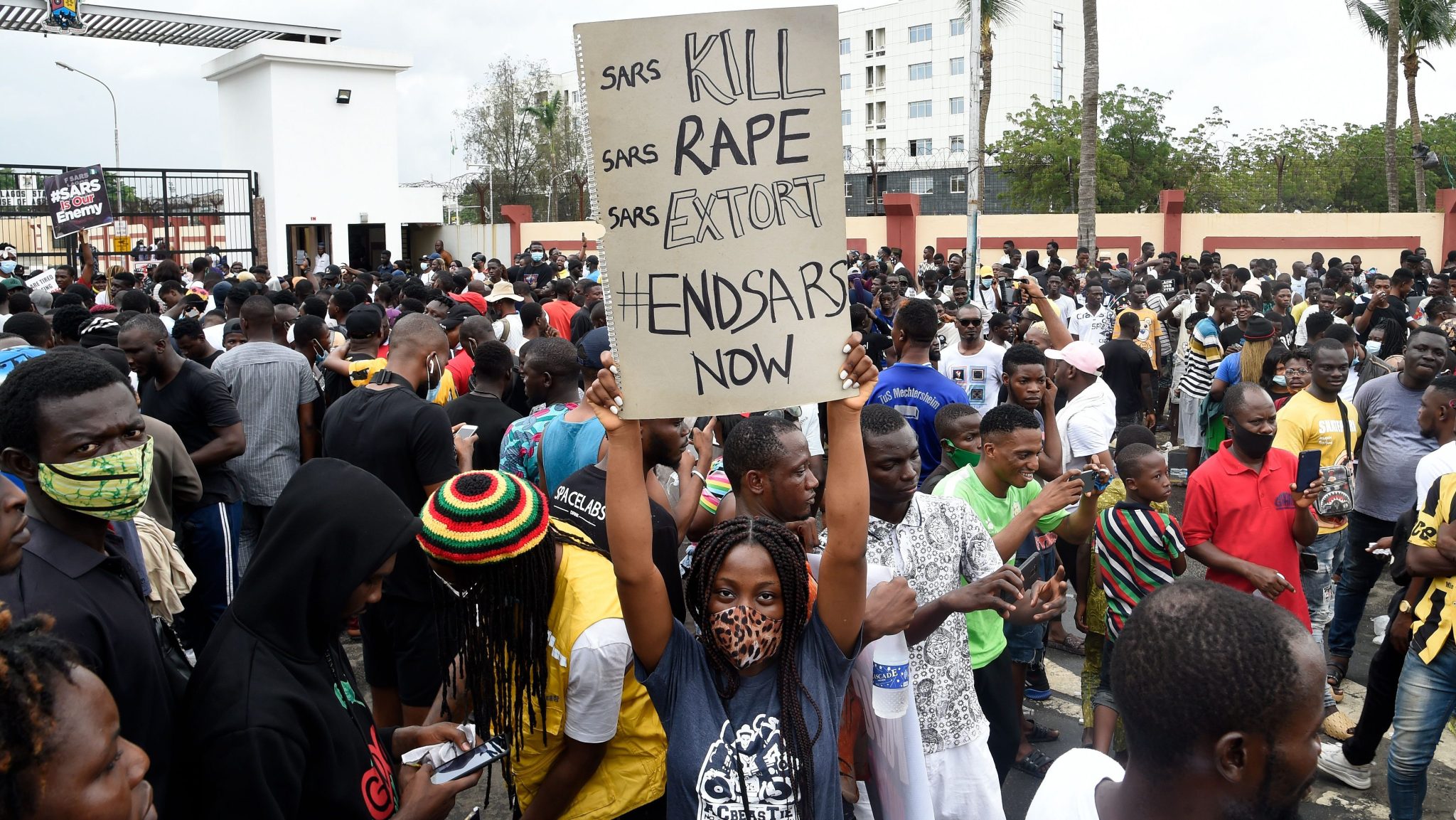
Yet, as Nigeria’s largest demographic, youth demonstrate resilience by mobilising via movements like #ENDSARS and deploying civic-tech solutions for justice, sustainability, and accountability. Fully engaging this key group remains essential to the nation’s future.
-
A Path Forward: Unlearning to Relearn
Thus, dealing with the critical challenge of identity requires young people to access and conclusively seek out answers in resources of research, folklore, community stories and the histories of their communities to ascertain the authenticity of their ancestral origins; understanding the unbiased history of the formation of the country, the constitutional provisions, the political history and systems of the country toward fully understanding their roles as citizens and the civic dimensions to this.
Who young people see themselves as goes a long way to determine how best they can engage the society and push themselves to achieve greater goals in life that will ultimately advance the greater good of society and in the long run the lived realities of citizens in all parts of the country.
-
A Future of Hope: The Dawn of a Self-Powered Generation
Despite the weight of our troubled history, I remain profoundly hopeful. The very act of unlearning, of questioning the narratives that have held us captive is itself an act of liberation. Young Nigerians are not waiting for permission to reimagine their country. They are building movements, creating solutions, and forging a new consciousness that transcends the divisions of the past.
I see a generation refusing definition by past failures, writing its own story rooted in truth, justice, and faith in a better Nigeria. They are creating a future where citizenship is a privilege, governance serves the people, and youth can dream freely. Unlearning restrictive histories is a challenging yet vital step toward creating a promising, dignified future. The seeds of change exist; together, we can realize a nation that truly serves everyone.
Joseph Amenaghawon, writes from Lagos, Nigeria. He is Head, CivicHive.