
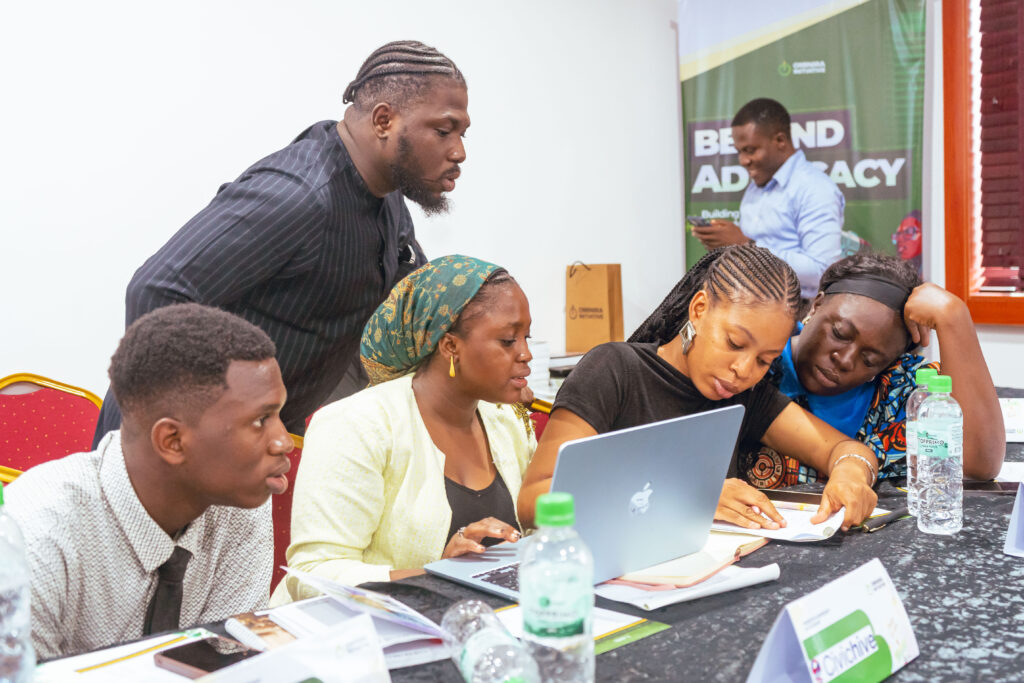
Advocacy is often associated with raising awareness, organising campaigns, creating compelling content, or mobilising people around a cause. While these are important first steps, awareness alone rarely translates into meaningful policy change. Sustainable impact requires strategy, collaboration, and a deep understanding of the systems and people that influence decision-making. These were among the most valuable lessons I took away from the Freedom Advocacy Workshop, hosted by Ominira Initiative for Economic Advancement in Ibadan, Oyo State, from 25–27 June 2026.
The two-day workshop brought together twenty (20) freedom advocates and policy reform leaders from across Nigeria with a shared goal: to strengthen their capacity to move beyond awareness campaigns and build sustained advocacy capable of influencing public policy and driving tangible social change. Through interactive training sessions, peer learning, practical exercises, and policy-focused discussions, the workshop explored coalition-building, stakeholder engagement, media strategy, Monitoring & Evaluation and the vision of establishing a structured Freedom Advocacy Network in Nigeria.

One session that particularly resonated with me was Stakeholder Mapping, Engagement, and Analysis, facilitated by Temiloluwa Oyeniyi. The session fundamentally challenged my understanding of advocacy by emphasising that successful advocacy is not simply about identifying a societal problem but about understanding the people who possess the power to influence its solution.
One statement from the session has stayed with me:
Every advocacy campaign fails because organisations focus on solving the technical problem while neglecting the political and human dimensions.
This simple but profound insight explains why many well-intentioned initiatives struggle to achieve lasting policy reforms. Policies are ultimately shaped by people, not just institutions and understanding those people is central to effective advocacy.
The session encouraged participants to rethink who qualifies as a stakeholder. A stakeholder is not limited to elected officials or government institutions. Rather, stakeholders include anyone capable of influencing decisions within a given sector, whether through formal authority, technical expertise, financial resources, or informal social influence.
An important lesson was the need to begin every advocacy initiative by asking two critical questions:
- Who is most affected by the problem?
- Who has the influence or capacity to create solutions?
These questions provide the foundation for meaningful stakeholder mapping. Instead of casual engagement, participants were urged to use structured stakeholder databases documenting institutions, key contacts, influence levels, and interests. This shifts engagement from an administrative task to a strategic advocacy function. A vital takeaway was that stakeholder analysis explains behavioural motivations; such as political capital, financial gain, or public trust. Recognising these drivers helps advocates build stronger relationships and more effective strategies.
Another highlight of the workshop was the session on Media Engagement: New Pathways for Advocacy, facilitated by Adedapo Akinola. The session reinforced the growing importance of media not merely as a communication platform but as a strategic advocacy tool capable of shaping public narratives, influencing policymakers, and expanding the reach of advocacy efforts. A key takeaway was that media engagement must be intentional, not an afterthought. Advocates should build relationships with journalists and creators to frame complex policy issues as human stories, which move advocacy beyond reports into resonate public conversations. This aligns with my work in civic engagement, where the media bridges the gap between policy and reality. Strategic communication transforms technical data into accessible dialogue that drives public awareness and action.
Beyond technical training, the Mental Health and Well-being session highlighted that effective advocacy begins from within. This emotionally taxing work requires resilience and empathy to navigate setbacks and public scrutiny. When advocates face burnout, their ability to build relationships and sustain change-making energy diminishes. The session framed self-care as essential, not a luxury. By prioritising well-being, advocates can think more strategically and remain committed to their causes. This unique addition reinforced that sustainable advocacy depends on healthy advocates, complementing the workshop’s focus on policy and systems change.

As someone working at the intersection of policy communication, civic technology, research, and development, the Freedom Advocacy Workshop has provided practical tools that will shape how I approach advocacy moving forward. From stakeholder analysis to strategic media engagement, I now appreciate that meaningful advocacy begins long before public campaigns. It starts with understanding people, building trust, and developing long-term relationships capable of influencing policy outcomes.
Advocacy is not simply about speaking for change, it is about identifying those who can make change happen, bringing them into the conversation, and sustaining engagement until meaningful reform is achieved. As I return to my work, I do so with renewed conviction that effective advocacy is built on understanding people as much as understanding policy. That lesson, above all, will remain the most enduring takeaway from the Freedom Advocacy Workshop.