
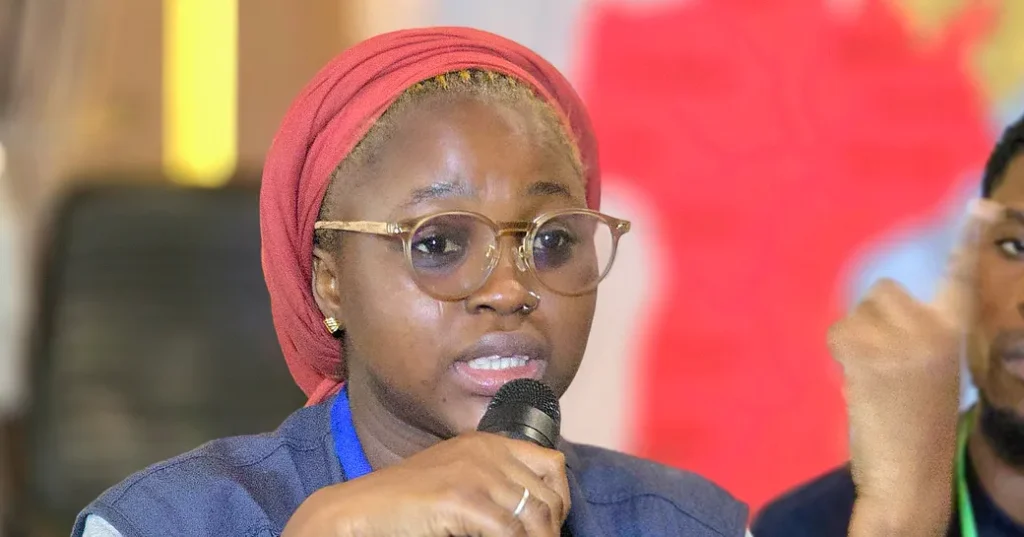
Observing the 2026 Osun Gubernatorial Election was like a homecoming for me. I am a proper Osun babe (with a Mix of Arewa somewhere in between). Both my parents are from Ikirun, Osun State, and I have always visited Osun State at least once a year; whether for the small Eid, or the big Eid. However, this trip felt different.
For the first time, I was returning to a place I call home not just as a visitor, but as an accredited election observer. Before this, I imagined election observation as simply going to polling units, watching the process and taking notes. I quickly realised it requires much more and definitely knowing about the electoral process, what election officials and security personnel are expected to do, understanding voters’ rights, asking questions, documenting and knowing when an issue needs to be escalated.
We travelled by road from Lagos after waiting in Oshodi park for 2hrs before starting the journey. A few hours into the journey, our tyre burst. Thankfully, our driver remained calm, changed it in about 20 minutes and we continued. He was quiet until someone asked what he would do if the opposition party won. His response “It can’t happen to us because Osun people are not Ekiti people” (In Yoruba by the way), this sent the bus into laughter.
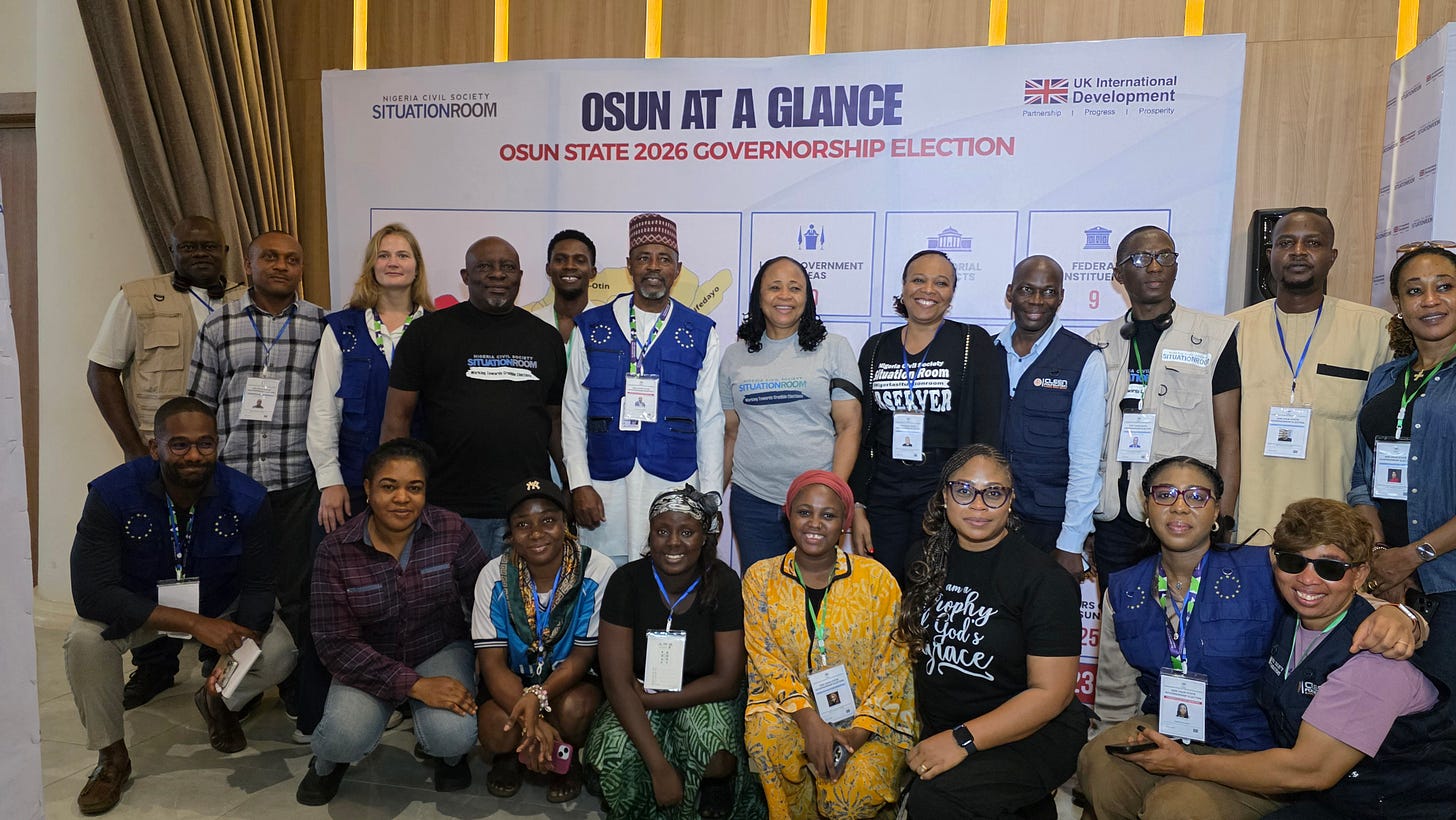
We arrived around 5 p.m in Oshogbo and headed to the Situation Room camp at Laim Hotel, where we received our observer kits and situation briefing. The Situation Room brought together civil society organisations including Enough is Enough Nigeria (EIE), CDD, PLAC and others. The Nigeria Civil Society Situation Room (Situation Room), is a platform of Civil Society Organisations working to support credible, transparent, and inclusive elections in Nigeria, the team had deployed observers across the 30 Local Government Areas of Osun State to observe the Governorship Election to be held on Saturday.
The pre-election briefing was where we mapped potential flashpoints, reviewed what observers should look out for and learnt how to report through the SEAT App. There were already concerns around late ballot paper reprinting, possible security threats, limited information for officials and reports of an unidentified vehicle allegedly firing shots. The tension was real, but so was the preparation.
Election Day
Election morning started early. We left our hotel and headed back to the Situation Room as early as 7:00am, where teams were assigned to different locations. Each team had a vehicle and a designated driver who was familiar with Osun. I had secretly hoped that I would be assigned to Ikirun, my hometown, but unfortunately, my team was assigned to parts of Osogbo and Ilesha. Each team was given a combination of areas considered flashpoints (Possible election violence) and areas that were not as heavily flagged. We left at exactly 8 a.m. because accreditation was expected to begin around 8:30 a.m., and we wanted to be at our opening polling unit by 8:15 a.m. I was fortunate to be on a team with the co-conveners of the Situation Room Madam Mma Odi and Celestine Odo alongside Dr Austin Igbe, Ademide from Tracka and my colleague Mojisola from CivicHive.
Our first stop was Salvation Army, Alekuwodo, Osogbo LGA, Registration Area ATA, PU 05, Code 005. We did not observe the opening there because the INEC officials were still setting up and there were already observers from the EU and Kimpact Development initiative present. We spent about 10 to 20 minutes before moving to another polling unit at Oja, Igbalaye Street, opposite Jesugbodo Shopping Complex, Osogbo LGA, Code 036, where there were 766 registered voters. We eventually arrived at our designated opening polling unit at Alekuwodo Premises, ATA Oja E, PU 018, Code 05, with 923 registered voters.
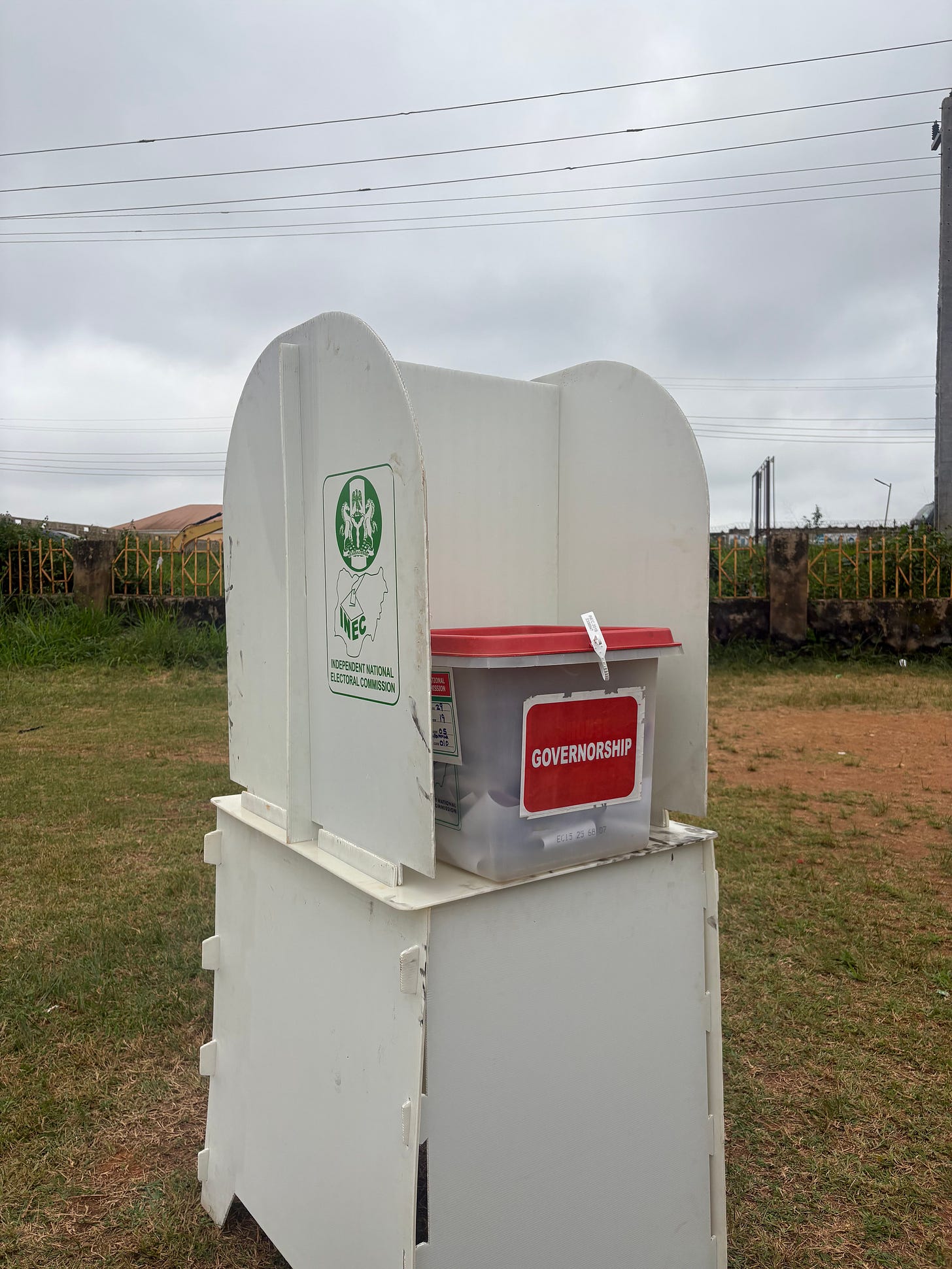
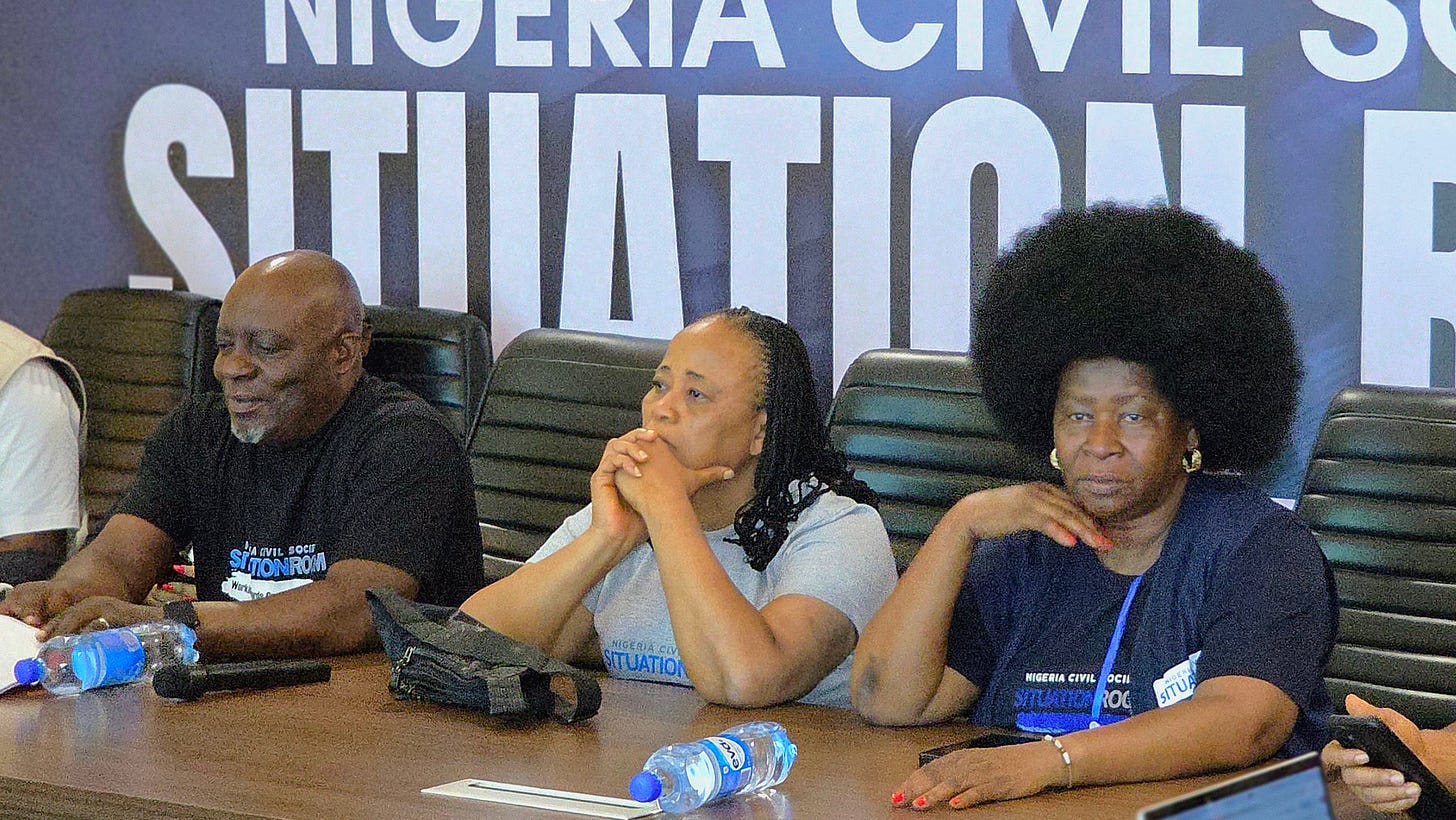 Something that immediately stood out to me at this polling unit was how the Presiding Officer began by explaining the rights of voters and what they should expect during the voting process. He also counted the voting booklets so that the party agents could record the numbers and verify them during the counting process. But what really caught my attention was the positioning of the voting cubicle. It was initially positioned in a direction that was relatively open to the public. One of the voters immediately noticed this and insisted that the cubicle be moved closer to the wall and away from public access so that their choices would remain private. The Presiding Officer listened, adjusted the cubicle and asked the voters if they were satisfied with the new positioning, and they responded affirmatively. The security personnel also assisted in making the adjustment. It was a small moment, but it told me something important, the people knew what they were entitled to and were willing to speak up when something did not look right. It also showed that INEC officials could listen and respond when citizens raised legitimate concerns.
Accreditation started almost immediately, and we observed the first ten voters going through the process. The BVAS was functioning properly, and each voter took an average of three to four minutes to complete the process. We estimated that more than 300 people could be processed before we returned from Ilesha. We registered our names as observers with the Presiding Officer and set off for Ilesha while Observers from Goodluck Jonathan foundation arrived.
The journey to Ilesha took about 30 minutes, and we encountered several checkpoints along the way. Madam Mma shared some of her experience from the Ekiti election, where she and her team had once had to run to safety from a polling unit that had become violent. She hoped that Osun would be different, especially because we were seeing many voters already turning out at the polling units we passed. We arrived in Ilesha at about 12:30 p.m. and visited our first polling unit at Akinwande Boluwatife, Ilesha West, PU 10, Code 10, African Children Grammar School area, with 946 registered voters. I reported through the SEAT App that the voting booth was properly positioned and that the election was proceeding well.
Ilesha felt quite different from Osogbo. There were more older people at the polling units, and we had the opportunity to conduct some vox pops (Videos), asking citizens why they had come out to vote and what they wanted the next government to do for them. At our second polling unit in Ilesha West, Isokun, Oba Ajimoko High School, Osogbo Road, PU 13, Code 05, there were 1,149 registered voters, and the situation was noticeably more difficult. People were standing around, some were sitting on the ground in the open field, and the queue did not appear to be moving quickly.
The BVAS was working, although only one device had been provided for a polling unit with such a large number of registered voters. We also noticed that some voters had already been accredited but could not proceed to vote because there was not enough ink for thumbprinting. We immediately asked whether the Presiding Officer had reported the problem, and he explained that another observer had already reported it. Madam Mma, after consultation from Dr Austin, decided to escalate the matter to the INEC Commissioner in Osun. We later received confirmation that the issue had been reported and was being addressed.
While this was happening, we noticed another issue with the voting cubicle. It was positioned in a way that could potentially expose voters to influence. We also noticed a party agent appearing to signal to a voter about what to do, followed by a thumbs-up from the voter and a smile from the agent. We immediately reported the situation to the police officer, after which the cubicle was repositioned and the party agent was warned that he could be removed if he moved closer to the voting area.
This was also where I began to understand how vote buying is evolving. Vote buying is no longer necessarily about someone standing at a polling unit with cash. It can be digitalised. Political actors can approach voters before election day, collect account details and identify people with voter cards. On election day, party agents can then monitor whether those individuals have voted for their party, with a digital transfer potentially taking place after the vote is verified.
Technology is changing how we participate in elections, but unfortunately, it is also changing how electoral manipulation can happen.
While we were still there, INEC officials at the LGA level brought another ink pad for voters and the queue began to move. The Presiding Officer later thanked us for the intervention, and we simply told him that we were glad the problem had been resolved.
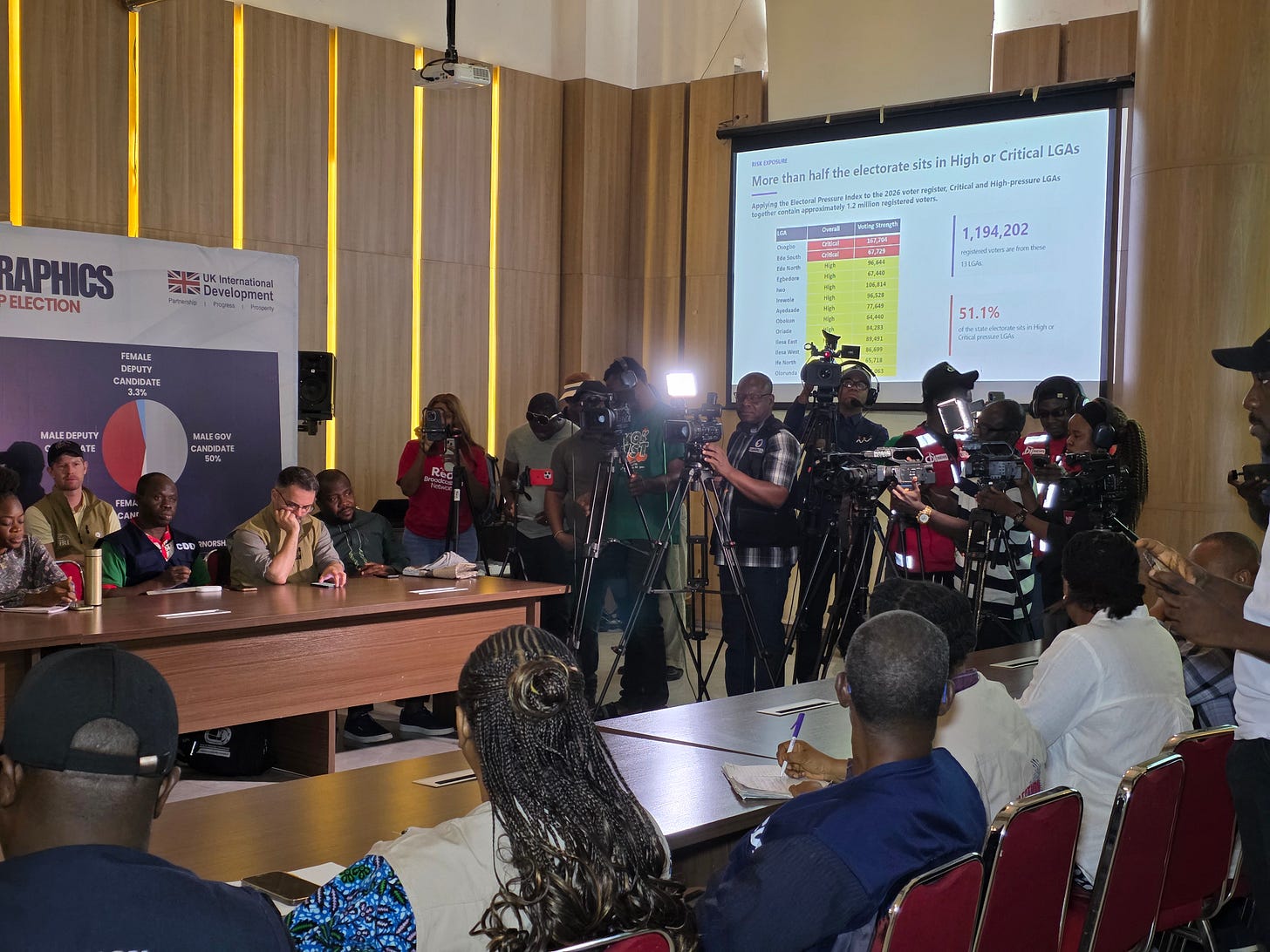
We left Ilesha at around 2 p.m. after various rounds and returned to the Situation Room, where teams reconvened to provide updates from the different polling units. The technical team shared reports from observers deployed across Osun and information submitted through the SEAT App. Observers reported on the organisation of the election by INEC, including the deployment of personnel and materials and adherence to established procedures. INEC personnel were out early, and voting commenced at the regular 8:30 a.m. time in 87% of the polling units observed. Officials generally demonstrated reasonable knowledge of election procedures, although some polling units experienced delays, including PU 009, Ward 1, Ede North LGA, and PU 010, Ward 03, Ife North LGA.
There were also reports of thuggery, drug abuse and indications of violence in Ifelodun LGA. In Ede, the environment was generally organised and conducive, although there were cases where older voters could not use the BVAS fingerprint function and had to rely on facial recognition. In Ede North, there were also concerns about accessibility for persons with disabilities because the entrance to one polling unit was not conducive, with a gutter, fence and raised walkway making access difficult.
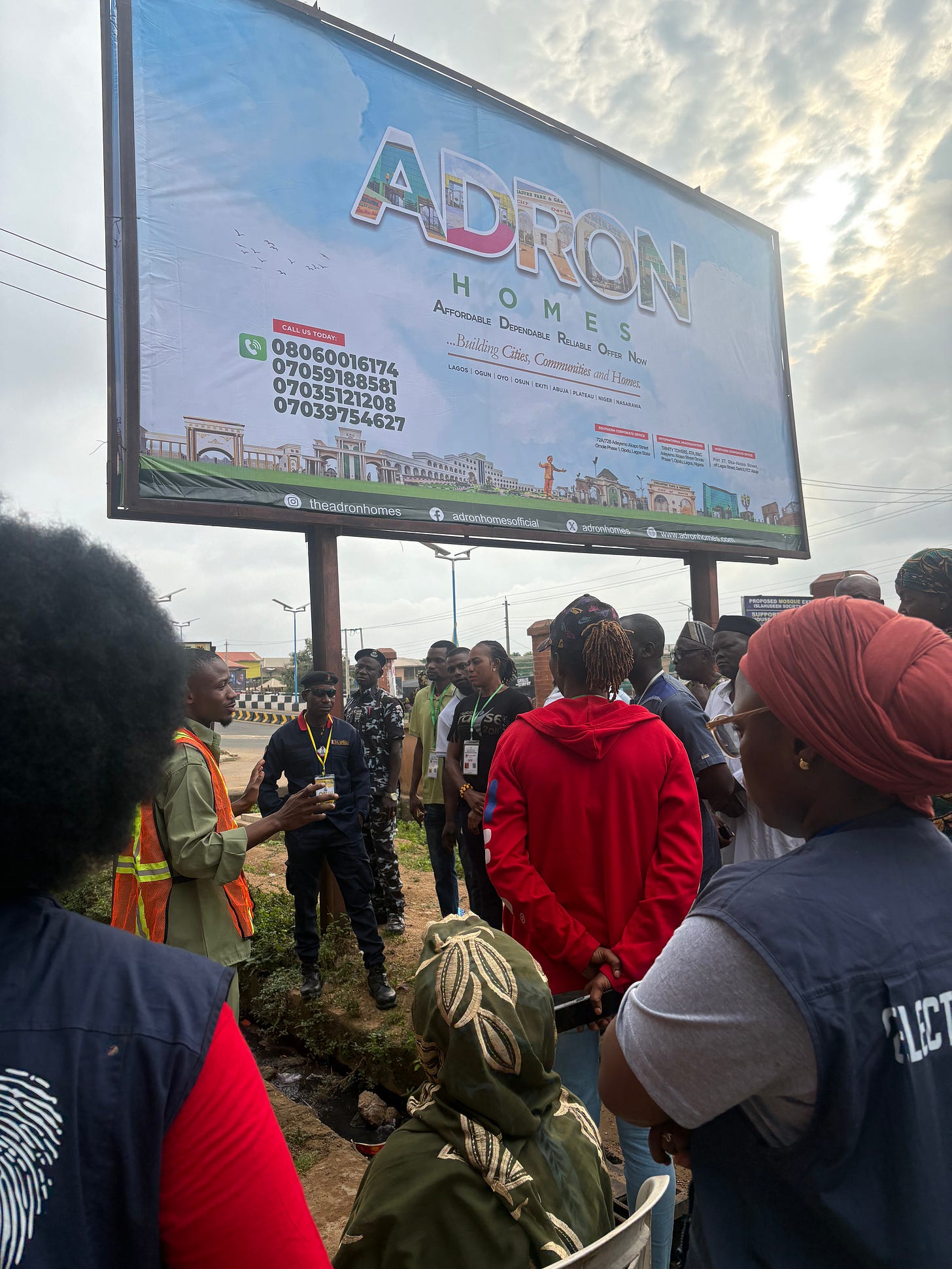
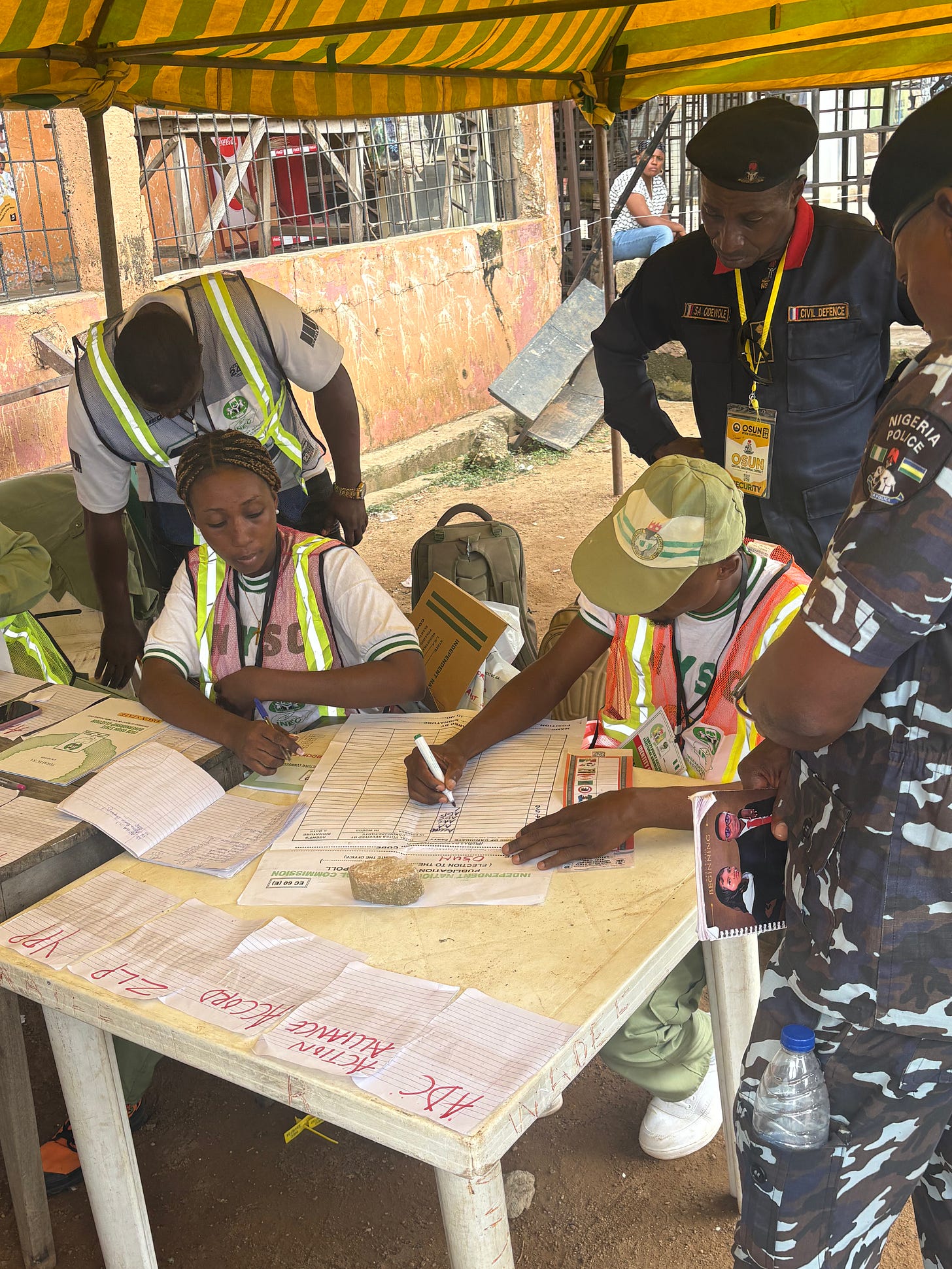
After the Situation Room had compiled the reports for its Interim statement, we returned to our opening polling unit at Alekuwodo Premises in Osogbo for the closing observation at 3:15pm. Voting had stopped, and it was time for the votes to be counted. Before the ballot box was opened, the Presiding Officer announced the number of unused ballot papers. The party agents and people in sight insisted that the unused ballot papers be cancelled before the box was opened, and the INEC officials complied.
The crowd also asked that the bags be checked to ensure that there were no additional ballot papers which caused an uproar but eventually every one was settled before the ballot box was opened. The figures were reconfirmed: there were 923 registered voters. The ballot box was opened, and the votes were counted. The total number of votes cast was 312, with Accord receiving 189 votes and APC following with 113. Adc- 6 Action alliance – 1 , APGA – 1, AAC – 1 and 1 – Void. After the count, we returned to the Situation Room for an interim press release and continued following the collation process from observers still at the PU and uploads on IREV.
The Trip Back Home
Getting back to Lagos was an adventure of its own. We missed the park, had to find another vehicle and eventually left around 9:30am. Our driver seemed determined to become Usain Bolt, making the three-hour journey back particularly rough. We stopped twice, once because we needed to use the bathroom and another time because a passenger was experiencing motion sickness. Interestingly, our driver, an Accord supporter, kept saying people had collected rice and money from the opposition party but still voted for whoever they wanted. He was happy about that and that the incumbent governor was taking the lead, which might have contributed to his race to Lagos as he wanted to return back to Oshogbo that same day for the jubilations.
By the time I got home, I was exhausted. I took a nap and woke up to follow the coalition through Premium Times’ live broadcast. As a proper Osun babe, I couldn’t completely switch off. I also saw people celebrating on the road to Lagos, they were genuinely happy about the election outcome as at the time and the feeling that their voices had been heard. That became my biggest takeaway from the experience. Democracy is not just the moment a ballot enters a box. It is the voter who asks questions, the official who listens, the observer who documents and escalates, the security officer who maintains order and, ultimately, the citizen who decides to show up. There were challenges and moments of tension, but there were also citizens who knew their rights and were willing to participate.