
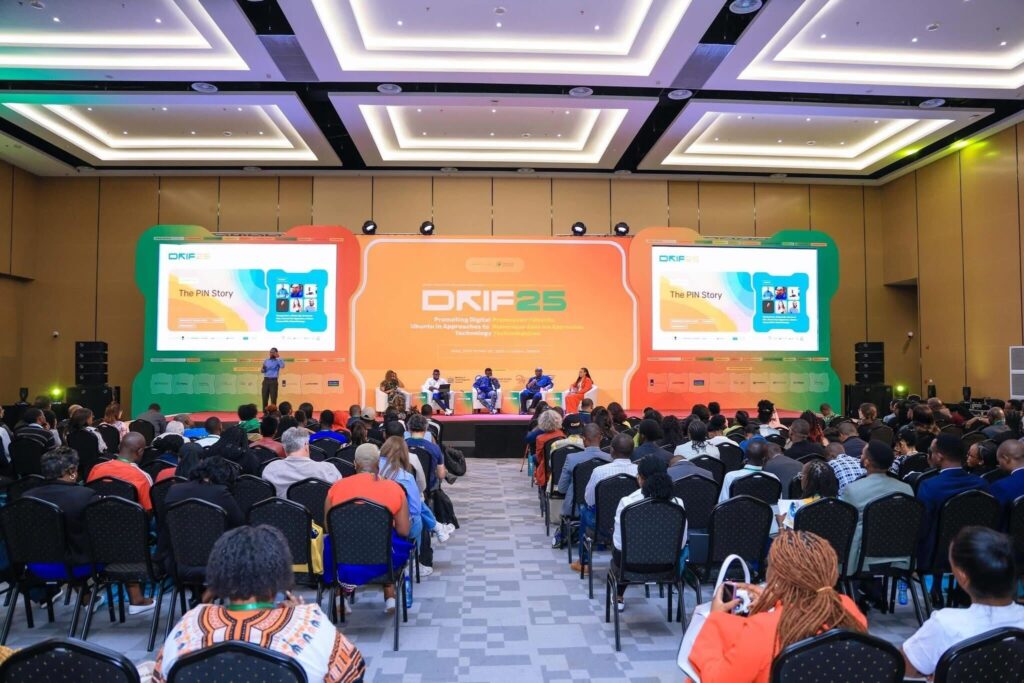
The 2026 Digital Rights and Inclusion Forum (DRIF26) in Abidjan, Côte d’Ivoire, was more than just another conference. It reflected Africa’s digital realities, ambitions, challenges, and opportunities. The event brought together policymakers, technologists, journalists, civil society leaders, researchers, innovators, youth advocates, and digital rights defenders from across the continent to address urgent questions about technology, governance, inclusion, and the future of Africa’s digital landscape.
For us, DRIF26 left us with more questions than answers, especially after our special session on “Shaping AI Regulations and Ethical Governance in Africa,” hosted by Civic Hive and the West Africa CivicTech Network.
Across Africa, discussions about AI governance are picking up speed. Governments are starting to talk about regulations. Civil society groups are calling for accountability. Researchers are looking at ethical issues. Young Africans are building AI tools to address local problems. But despite these positive steps, many countries are still struggling to put in place the basic systems needed for ethical and inclusive AI.

Africa’s challenge is not just about regulating artificial intelligence. It’s also about building the right infrastructure, institutions, legal systems, digital skills, and public trust so that AI benefits people rather than harms them. This tension shaped many of the discussions at DRIF26.
-
Africa’s AI Journey: Between Promise and Preparedness
Artificial intelligence is often seen as the future. In Africa, though, the conversation is more complex. The continent faces both unique opportunities and challenges, with immense possibilities for governance, healthcare, education, agriculture, justice systems, civic participation, and economic growth. On the other hand, Africa remains disproportionately affected by weak digital infrastructure, internet inequality, inadequate regulatory frameworks, underrepresentation in global AI development, and growing exposure to harmful technologies such as deepfakes, surveillance systems, and algorithmic bias.
During several sessions at DRIF26, many speakers stressed that Africa should not be a mere consumer of technology developed elsewhere. The continent needs to take an active role in shaping the rules, ethics, and governance of AI, rather than isolating itself from reality.
More than 400 million Africans still lack internet access. Many others face high data costs, unreliable connections, a lack of digital skills, or are left out because of language barriers. In many places, being part of the digital world is still a privilege, not a right.
As some participants noted, digital inclusion is about more than just cables or Wi-Fi. It means making sure people can join digital spaces safely, meaningfully, and at a fair cost. Access to information, online safety, and digital participation are now closely linked to human dignity and democracy.
The future cannot be truly inclusive if millions of people are left out.
-
Justicepadi.Ai And The Promise Of Local Innovation
One of the most inspiring moments at DRIF26 was how people responded to JusticePadi.ai, Nigeria’s mobile platform focused on preventing legal problems and improving access to justice.
The response was impressive. JusticePadi.ai shows what can happen when African innovators create solutions based on local needs. The platform offers AI-powered legal help in local languages and dialects, using both voice and chat. This makes legal information available to people with limited literacy, little internet experience, or little legal knowledge.
Even more importantly, the tool quickly connects users to nearby lawyers, helping to reduce delays that can affect the outcome of rights-violation cases.
Over 60 people tried the platform during an interactive session at DRIF26, leading to important discussions about access to justice, making AI accessible, and designing for everyone. led something powerful: access to justice is not just a Nigerian issue. It is an African issue.
Technology cannot truly change lives if it leaves out those most at risk of injustice
The enthusiasm surrounding JusticePadi.ai underscored the need for AI systems built for Africa’s people, languages, cultures, and accessibility needs. Too often, AI discussions focus on big ideas and forget whether everyday people can actually benefit from these technologies. Fundamental question: What does ethical AI look like when designed for the realities of African communities? The answer starts with accessibility.
-
Feminist AI Governance and Digital Another important discussion at DRIF26 focused on feminist approaches to AI governance and fighting technology-driven gender-based violence. violence.
The session showed how digital harms now have real-world effects. Participants said that our digital presence should be protected just as our physical bodies are, with the same rights to dignity, privacy, and safety.
This topic is especially urgent today, with deepfakes, non-consensual intimate images, online harassment, biased algorithms, and organised digital abuse on the rise.
A key point was the need for survivor-focused language and policies. Changing terms from “revenge porn” to “non-consensual intimate image abuse” is part of a bigger effort to put victims first instead of sensationalising the harm. It is also important to recognise that internet access is becoming a feminist issue.
When access to digital spaces is not fair, women and marginalised groups are left out of jobs, civic life, education, and online expression. Bad platform management and biased algorithms can make these gaps even worse. The session reinforced an important truth: representation alone is not enough.
Real progress in AI governance requires feminist voices that understand intersectionality, lived experiences, and the deeper causes of digital exclusion.
-
The LONDA Report and Africa’s Digital Reality
One of the defining moments of DRIF26 was the official launch of the 2025 LONDA Report by Paradigm Initiative. Derived from a Zulu call to action meaning “protect” and “defend,” the LONDA Report continues to serve as one of Africa’s most important advocacy tools for digital rights and inclusion.
The report does more than list statistics. It shares real stories about digital access, exclusion, online freedom, internet shutdowns, surveillance, data protection problems, and technology-related harms in African countries. The report is especially valuable because it focuses on both accountability and practical solutions.
For groups working on human rights, mental health, civic engagement, and digital inclusion, these issues are real and urgent. Digital rights affect whether young people can speak freely online, whether communities can organise, whether survivors can get help, and whether citizens can take part in democracy. A common theme at DRIF26 was that building an inclusive digital future takes more than just internet access.
Africa’s digital future should be measured not just by infrastructure growth, but also by people’s experiences.
It requires protection. It requires accountability. And above all, it requires people-centred systems. Mr Gbenga Sesan stressed the need for intentional storytelling along with data-driven advocacy. Numbers are important, but stories help people feel empathy, understand urgency, and connect with the issues.
-
Communication Beyond Broadcasting
One of the most practical sessions at DRIF26 explored the theme: “Stop Broadcasting, Start Communicating: Optimising Channels for Digital Rights Conversations.” The session addressed a common problem in development communication: organisations often focus on reaching more people but forget about real engagement.
Technical jargon, policy-heavy language, the use of technical terms, heavy policy language, and one-way messages often push away the very communities organisations want to help speak. It is about listening. It means understanding how people take in information, which platforms they trust, what language speaks to them, and how feedback should shape messages as things happen.
This lesson applies directly to AI governance conversations in Africa. If AI ethics talks remain limited to elite policy groups and don’t include regular people, they risk becoming empty exercises rather than real movements for change.
Helping the public understand these issues should be at the heart of digital rights advocacy. People cannot defend rights they do not understand.
-
Data Sovereignty, Mental Health, and Digital Power
The final day of DRIF26 brought intense discussions around data sovereignty and digital power.
One phrase kept coming up: Data is dignity.
Data is no longer just a technical matter. It is now about ownership, identity, control, and civic power. Who controls African data? Who profits from it? Who decides how it is collected, stored, and used? Most importantly, how can African communities protect themselves in a world that increasingly relies on data?
Participants emphasised that marginalised groups, women’s organisations, journalists, and civil society must have fair access to data and decision-making. Data control should not be limited to governments and big companies d mental health. As online advocacy grows in Africa, burnout, online harassment, trauma, and digital fatigue are becoming big concerns for activists, journalists, moderators, and community organisers.
TikTok representatives talked about policies and practices to improve digital safety and mental health support. While platform accountability is still debated worldwide, bringing mental health into digital rights discussions was an important step. We cannot talk about technology without considering the well-being of the people driving digital movements.
-
Children, Conflict, and Invisible Data Subjects
Another powerful session centred on children and AI governance under the theme: “Invisible Data Subjects: Why Children Must Be at the Centre of AI Governance.”
The discussion showed that children are often included in datasets but excluded from policy decisions. Their digital information is collected, analysed, sold, and used, often without real protection. As AI becomes more common across schools, healthcare, social media, and public services, it is essential to have digital policies that prioritise children. At the same time, talks about conflict, disinformation, and deepfakes showed that these threats are growing in fragile parts of Africa. Journalists and fact-checkers shared stories from conflict zones where fake information increases violence, confusion, and distrust.
These talks made it clear that Africa cannot just copy foreign models for AI governance. Africa’s unique challenges, such as conflict, language diversity, political instability, internet shutdowns, and civic risks, require local solutions tailored to the context.
-
Partnerships Will Shape Africa’s Digital Future
One of the biggest takeaways from DRIF26 was the importance of partnerships. No single group can build Africa’s digital future by itself. We need civil society; civil society needs technologists; technologists need communities; communities need policymakers who listen.
And everyone needs researchers, journalists, educators, innovators, and young leaders who can turn complex digital issues into real action.
The collaborations visible throughout DRIF26 demonstrated the value of multi-stakeholder engagement. Partnerships among organisations such as Civic Hive, BudgIT Nigeria, Paradigm Initiative, Safe Haven Foundation, Naija Feminists Media, Human Rights Journalists Network Nigeria, and numerous grassroots organisations created spaces where practical solutions could emerge.
The volunteers, translators, facilitators, developers, and community builders working behind the scenes were just as inspiring. Their efforts showed the teamwork needed to create truly inclusive digital systems.
One volunteer shared that they were suddenly asked to translate sessions live from English to French. Another participant built a networking and attendance platform for delegates in just two hours to help everyone work together better. These moments captured the innovative energy that often defines African problem-solving, responsiveness, and courage.
-
Looking Ahead to DRIF27 in Nigeria
As DRIF26 ended with the news that DRIF27 will be in Nigeria, the excitement in the room was clear. Beyond the celebration lies responsibility. Nigeria and Africa as a whole are at a key moment in their digital journeys. Artificial intelligence will continue to reshape governance, media, economies, justice, healthcare, education, and social life. But how good that change is will depend on whether African societies put inclusion, ethics, accountability, and human dignity first. It should be built around people.
DRIF26 reminded me that even with all the uncertainties, there is still a lot of hope. Across Africa, young people are leading discussions, building tools, organising communities, challenging harmful systems, and imagining better digital futures. Raised at DRIF26 may not yet have complete answers. But maybe progress starts right there, when we are willing to ask tough questions together, because Africa’s digital future is not something that will simply happen to us.