
A political manifesto is more than a document released during an election campaign. It is a formal statement of a political party’s vision, priorities, and proposed policies, outlining what it intends to do if elected. Ideally, a manifesto brings together a party’s development philosophy, ideological leanings, broad vision, and sector-specific policy proposals across areas such as the economy, education, healthcare, security, and social welfare.
The process of developing and publishing a manifesto involves identifying the issues affecting citizens, setting priorities, proposing policy solutions, and explaining how these solutions will be implemented and funded. While political parties typically publish manifestos that reflect their broader vision and policy direction, individual candidates are expected to develop agendas that align with their party’s manifesto and respond to the needs of the constituencies they seek to represent. In Nigeria, however, a candidate’s agenda is often also referred to as a manifesto.
A manifesto also provides a basis for accountability. It gives citizens something concrete to refer to when evaluating candidates’ commitments during campaigns and assessing their performance if elected. Yet, when candidates fail to develop, publish, or make their plans accessible to the public, citizens are left with campaign slogans and broad promises that are difficult to scrutinise or measure.
This gap makes it necessary to raise awareness about the importance of manifestos and encourage candidates to move beyond promises towards clearly articulated, cost, and publicly available plans. The “Costed Manifesto Challenge 2027” by Paradigm Leadership Support Initiative (PLSI) in partnership with CivicHive is geared towards engaging citizens, particularly young people and creatives, to make their voices heard and demand clear, realistic and manifestos from presidential and governorship candidates.
The challenge is calling on political aspirants or representatives to go beyond campaign slogans and explain what they intend to do, how they plan to do it, how much their promises will cost, and where the funding will come from. It also created an opportunity for citizens to use their creativity and digital platforms to encourage more informed conversations about political commitments and public accountability.
-
Turning Citizen Voices into Creative Action
Running through October and November 2026, the Costed Manifesto Challenge encourages participants to communicate the importance of cost manifestos through short videos, skits, explainers, commentary, spoken word and other engaging digital formats.
citizens deserve to know not just what candidates promise, but how those promises will be delivered
The campaign built on PLSI previous “Costed Manifesto Challenges” during the Ekiti and Osun off-cycle governorship elections, bringing the initiative to a wider national audience ahead of the 2027 presidential and governorship elections. Collaborating with CivicHive, we are joining actions to make conversations about political promises more accessible, particularly to young people who engage with civic issues through social media and other digital platforms.
-
Celebrating the Top 5 Creators
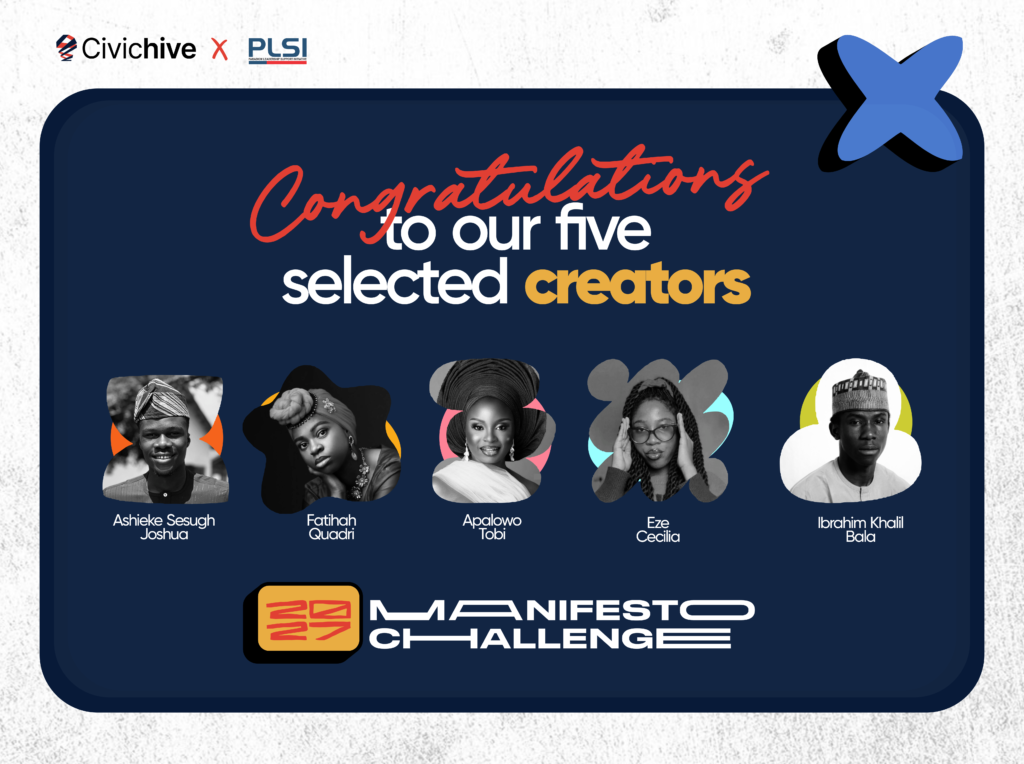
Following the assessment of entries, 5 creators were selected across the presidential and governorship challenge categories, recognising participants whose submissions stood out against the challenge’s assessment criteria, including creativity, clarity, relevance, audience engagement, reach and potential to generate meaningful public conversation.
Meet the Top 5 Winners:
Their entries represent the role that citizens and digital creatives can play in strengthening democratic participation. As the 2027 elections approach, citizens have an important role to play in shaping public conversations, scrutinising political promises and asking candidates for clear, credible plans.