
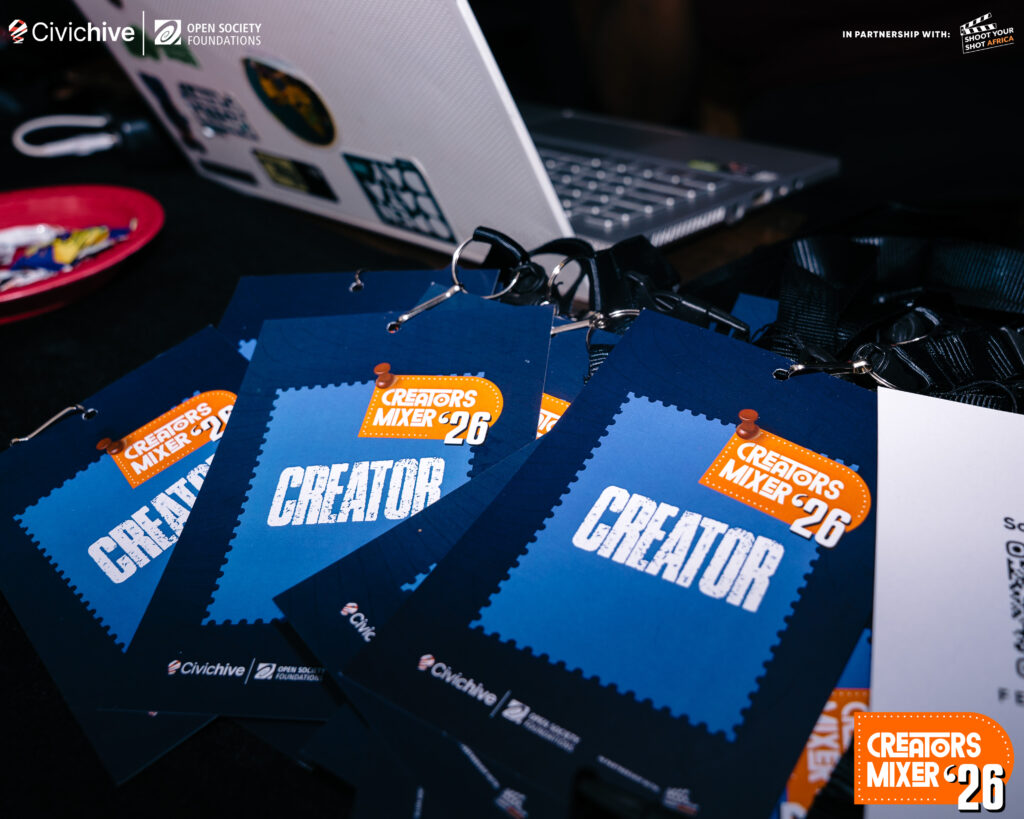
On Friday 27th of April, 2026, Civic Hive, in partnership with Shoot Your Shot Africa, hosted the Creators Mixer 2026 at MADHouse, University of Lagos, bringing together a vibrant community of creatives, storytellers, digital creators, to explore how creativity can shape narratives, influence society, and drive meaningful change. The mixer was a deliberate starting point for the Creative Change Makers Fellowship (CCMF), Civic Hive’s flagship initiative designed to support creatives who are passionate about using storytelling, art, media, and digital platforms to strengthen accountability, civic education, and democratic participation in Nigeria.
At a time when public conversations increasingly unfold across culture, digital media, and creative spaces, the need to intentionally build a community of creatives who understand the power of narrative has never been more urgent. This is why the Creators Mixer was necessary. It set the tone for what the fellowship represents: a generation of creators who are not just making content, but shaping culture, influencing public discourse, and driving meaningful change.
Why the Mixer Mattered
The Creative Change Makers Fellowship is built on the belief that creatives are among the most powerful civic actors of our time. From short-form videos and satire to poetry, and storytelling, creators influence how people think about politics, identity, culture, governance, and society. The mixer served as a bootcamp into that larger vision.

It created a space for young creatives to understand the intersection between creativity and social impact, hear honest stories from established creators, learn what consistency, branding, and purpose look like in practice, and begin to imagine their work beyond just entertainment. More importantly, it gave participants a sense of community and possibility.
Key Highlights
The speaker sessions were deeply honest, and practical.
Doctor Wales:
Dr. Olawale’s session was a strong reminder that the creative journey often demands resilience. He spoke candidly about moments when he almost gave up and how the encouragement of a friend pushed him to continue showing up.
Whatever you’re going through, just do it. Post it because you don’t know which one will go out well.
He emphasised that overanalysing kills creativity, while consistency builds momentum. According to him, success should not always be measured by a large following. His 1-1-1 theory resonated strongly with attendees: if one person views your work, one person likes it and one person engages with it, that is already success.
He also stressed the importance of systems: “creating systems is the only way to be consistent.” For creators trying to grow sustainably, this was a major insight.
Stacey Ravvero:
Stacey brought a deeply personal and reflective conversation around identity, culture, and multidisciplinary expression. As an artist and sculptor, she shared how cultural expectations often shaped how women were perceived within certain creative fields, especially sculpture and bronze work. She reflected on how societal beliefs suggested that women were not “meant” for that kind of work.
Yet, rather than allowing that narrative to define her path, she leaned into what she truly wanted to create. Her story became a powerful reminder that creators must remain open-minded and authentic, even when their work challenges norms. Her session was particularly inspiring for women creatives in the room navigating identity, culture, and visibility.

Kelvin Black (Governor Amuneke):
Try different things until you discover what works best and is sustainable.
Kelvin’s conversation centred around branding, experimentation, and sustainability as a creator. He shared how he did not begin with political satire. Instead, he explored multiple styles and creative directions until he found what resonated deeply with people. He also spoke honestly about the risks that come with socially relevant content, including threats and public scrutiny.
Yet, he made it clear that he had already made peace with the visibility his work would bring. This honesty gave attendees a realistic picture of what it means to create bold, impactful work.
Timi Agbaje:

Whatever kind of art you do, make sure it has a social impact.
He challenged creators to think about how their work affects people and the communities around them. He also emphasized branding and structure, a theme that consistently ran across the day. The idea that creators must intentionally build systems around their platforms was one of the strongest recurring lessons from the Mixer.
What’s Next?
The Creators Mixer is only the beginning. As the first step into the Creative Change Makers Fellowship, the event has set the pace for a broader movement of creatives committed to social good.
The next phase focuses on deepening learning, collaboration, and storytelling for accountability. Following the success of the Lagos edition, the Mixer is set to move into other cities across Nigeria, beginning with Abuja, where Civic Hive aims to continue building communities of creatives who are passionate about impact.
This is more than a fellowship pipeline. It is the beginning of a creative movement. Because creators do not just shape culture. They shape society, and this is only the start.
