
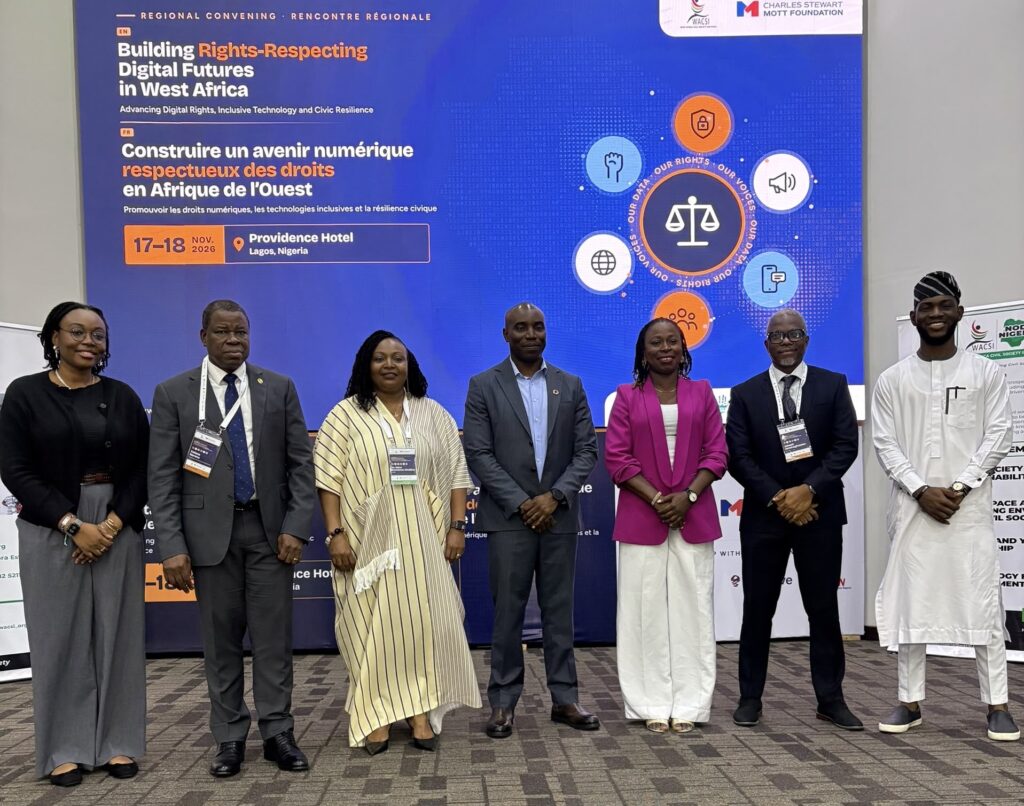
For two days, November 17–18, 2026, I had the opportunity to attend the West Africa Civil Society Institute (WACSI) High-Level Regional Convening on Digital Rights, Accountable Technology and Civic Resilience in West Africa, held at The Providence Hotel, GRA, Lagos.
The convening, themed “Building Rights-Respecting Digital Futures in West Africa: Advancing Digital Rights, Inclusive Technology and Civic Resilience,” brought together stakeholders from across West Africa, including civil society organisations, policymakers, technology experts, development partners, researchers, and digital rights advocates.

It was an opportunity to learn, exchange ideas, engage with people working in different sectors, and better understand the growing importance of digital rights in our increasingly technology-driven society.
- Day One: Understanding the Digital Rights Landscape in West Africa
The first day started with a lively cultural performance. It was one of the most enjoyable moments of the event, as the performers brought so much energy into the room that it was hard not to dance along. It was a fun way to bring everyone together before the day’s activities began.
After the opening ceremony, welcome remarks, partner statements and goodwill messages, Mr. Korona Fofana, Acting Director of Information Technology Services at the ECOWAS Commission, gave the keynote address. He spoke about how technology, human rights and civic participation are connected, setting the tone for the discussions that followed.
The first major session was titled The State of Digital Rights in West Africa: Trends, Threats and Opportunities. Speakers discussed some of the issues affecting people online, including internet restrictions, data protection, online surveillance and freedom of expression. One thing I took away from this session was that having access to the internet does not always mean that people are safe or free to do what they want online. As more people use digital platforms to share information, communicate and take part in public discussions, it is important to make sure their rights and personal information are protected.
The third session, Governing the Digital Space: Balancing National Security, Regulation and Fundamental Rights, focused on how governments can make rules for the digital space without taking away people’s rights. Speakers discussed freedom of expression, privacy and access to information. They also talked about how civil society organisations can help ensure that government policies protect people rather than restrict their freedoms.

Another session was Technology, Civic Space and Democratic Participation. This discussion looked at how artificial intelligence, automated decision-making and digital surveillance are affecting the way people take part in democracy. Speakers also shared concerns about how these technologies could affect elections and people’s ability to participate in public affairs. The main point was that technology should make it easier for people to participate, not create more barriers for them.
The last session for the day was a Power Talk titled The Private Sector and Digital Rights: What Does Responsible and Inclusive Connectivity Look Like? The discussion focused on what telecommunications companies and technology providers can do to make internet access more affordable, protect people’s personal information and be more open about how they use people’s data.
Overall, the first day gave participants a better understanding of how technology affects our everyday lives, our rights and the way we take part in society. It also showed why everyone, including governments, civil society organisations and private companies, has a role to play in making the digital space safer and more accessible for everyone.
- Day Two: Artificial Intelligence, Inclusion and Digital Resilience
The second day started with a recap of the previous day’s discussions before moving into conversations about artificial intelligence, digital inclusion and how civil society organisations can become more resilient in the digital space.
The sixth session, Artificial Intelligence, Emerging Technologies and Human Rights in Africa, looked at how AI and other emerging technologies are changing governance, civic participation and the way civil society organisations operate. Speakers discussed issues such as algorithmic accountability, data protection, digital identity, misinformation and the need to ensure that technology is developed and used responsibly.
I found this discussion particularly interesting because AI is becoming a bigger part of our everyday lives, and its influence is only going to grow. It made me think about the importance of finding a balance between embracing new technologies and protecting people’s rights, privacy and freedom.
The next session, Inclusive Digital Futures in West Africa: Ensuring No One Is Left Behind, focused on the challenges that prevent some people from fully benefiting from digital opportunities. These include the high cost of internet access, poor network connectivity, limited digital skills, language barriers, accessibility challenges and gender inequality.
One thing I took away from this discussion is that having access to technology should not be a privilege. Building an inclusive digital future means making sure that people, regardless of where they live or their background, have the resources and opportunities to access and benefit from technology.

Another important discussion was on Strengthening Civil Society’s Digital Resilience. This session explored how civil society organisations can better protect themselves from digital threats and prepare for challenges that may affect their work. Some of the issues discussed included digital security, risk assessment, data protection, online harassment, disinformation and the importance of having proper security measures in place.
The ninth session, Financing Rights-Respecting Digital Futures in West Africa, shifted the conversation to the financial side of digital rights advocacy. Speakers highlighted some of the funding challenges facing organisations working in this area and discussed the need for more sustainable funding, stronger partnerships and support from development partners and the private sector.
The final session, From Dialogue to Action – Building a Regional Agenda for Digital Rights and Civic Resilience in West Africa, brought together many of the issues raised throughout the two days. Rather than ending with discussions alone, participants looked at practical steps that could be taken, areas where organisations could work together and the roles different stakeholders need to play in promoting digital rights across the region.
I liked that the convening ended on this note because it shifted the focus from simply identifying problems to thinking about what can actually be done to address them.
Beyond the presentations and panel discussions, one part of the convening I particularly enjoyed was the opportunity to meet and interact with people from different organisations and backgrounds.
The networking breaks gave participants time to introduce themselves, exchange ideas and learn more about the work others are doing. I got to meet new people, have interesting conversations and make connections that I found valuable.
As someone interested in communications, public engagement and the work of civil society organisations, being in a room with people working across technology, governance, advocacy and development was a great opportunity to learn beyond what was discussed during the sessions.
I also appreciated the fact that the event brought together people with different experiences and perspectives. Listening to experts and practitioners share what they have encountered in their respective countries made some of the discussions easier to understand and gave me a better picture of the challenges involved in promoting digital rights across West Africa.
Looking back, attending the WACSI High-Level Regional Convening 2026 was a valuable learning experience for me. Over the two days, I gained more insight into digital rights, responsible technology, online safety, artificial intelligence, digital inclusion and the importance of building stronger and more resilient civil society organisations.
One of my biggest takeaways is that the future of technology should not be measured by innovation and connectivity alone. It should also be about protecting people’s rights, holding those responsible accountable and ensuring that everyone has a place in the digital space.
As West Africa continues to embrace digital transformation, it is important that conversations around digital rights and civic resilience remain part of the process. Governments, technology companies, civil society organisations and citizens all have a role to play in making the digital space safer, more inclusive and respectful of people’s fundamental rights.
I left the convening with new knowledge, meaningful connections and a better understanding of why these conversations matter. It was two days well spent, and I am grateful for the opportunity to have been part of it.