
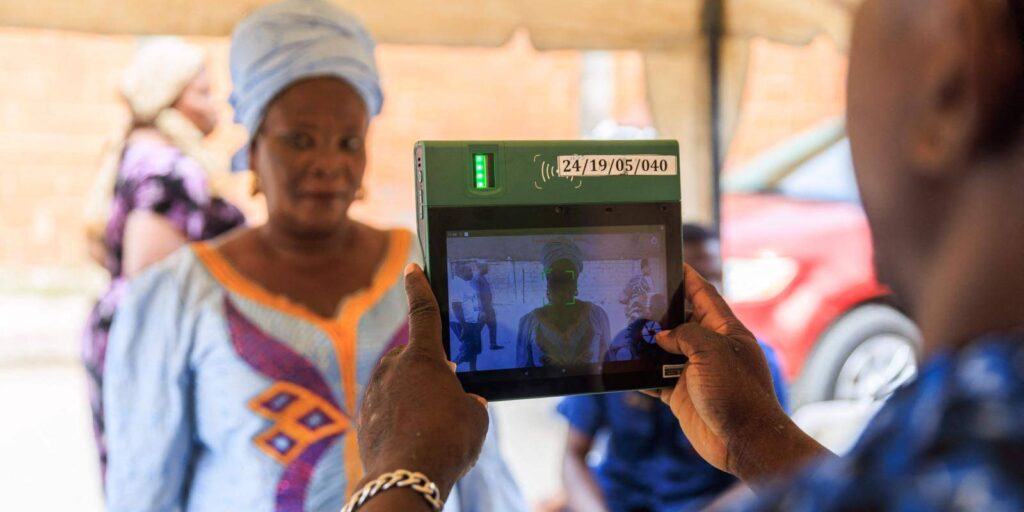
The Nigerian electoral landscape is navigating a critical historical shift, pivoting from the inherent vulnerabilities of manual processing toward a regime defined by technological integration. This transition represents more than mere modernisation; it is a strategic necessity for institutionalising public trust and ensuring systemic integrity.
Since the 1993 “Option A4” system, a paper-based, military-era relic, Nigeria has moved through various civilian-led experiments, eventually adopting the Bimodal Voter Accreditation System (BVAS) and the Independent National Electoral Commission (INEC) Result Viewing (IReV) portal. While these tools are a “game changer” for voter identification, the central thesis of our current democratic era is that technology is a double-edged sword. While it bolsters identification confidence, its systemic failures currently risk disenfranchising the very citizens it aims to empower, creating a paradox where technical glitches translate into democratic exclusion.
Citizen Adaptation and Engagement
Nigeria’s “digital age” has created a strategic intersection between telecommunications expansion and civic duty. With widespread smartphone penetration, a distinct “digital behaviour” has emerged among the electorate. Citizens have transitioned from passive participants to active digital stakeholders, utilising mobile pre-registration to bypass traditional physical barriers.
This shift has particularly resonated with the youth, who utilize social media as a platform for democratic documentation and engagement. However, this burgeoning digital enthusiasm is frequently stifled on election day when the theoretical efficiency of a modern system collapses under the weight of “last-mile” technical realities.
Systemic Friction: Deconstructing Election-Day Failures
Technical reliability is the non-negotiable cornerstone of electoral legitimacy. In the Nigerian context, failures at the polling unit level create “vulnerable situations” that directly threaten the franchise. To secure the system, we must address the primary technical barriers and the resulting “high-stakes” legal risks. Under the 2026 Electoral Act, if technology fails and no immediate replacement is found, the election must be cancelled, a legal mandate that heightens the consequences of hardware failure.
When a citizen arrives at a polling unit only to find that “the machines don’t work,” the result is more than a delay; it is an erosion of the democratic contract that discourages future participation.
Technology as a Barrier to Marginalised Groups
Technological failure is rarely “neutral.” In Nigeria, the absence of multi-modal authentication, such as OTP-based overrides or manual fallback options, creates targeted exclusion for specific demographics.
- The Elderly: Data from recent elections in Ekiti and the FCT highlight a critical biometric failure: skin texture changes in the elderly frequently prevent fingerprint and facial recognition. Without alternative authentication modes, the elderly face de facto disenfranchisement.
- Remote Communities: A stark “connectivity divide” persists. Because the law mandates cancellation in the face of un-rectified tech failure, voters in remote areas are effectively punished for their lack of geographic connectivity.
- Persons with Disabilities (PWDs) and IDPs: There is a notable absence of special provisions, such as preferential queues for PWDs. Furthermore, Internally Displaced Persons (IDPs) occupy a “policy void”; there is currently no legal mechanism or technological provision for them to vote outside their registered domains, compounding the trauma of displacement with political invisibility.
- Gender-Specific Barriers: In specific religious contexts, such as women in Purdah, the heavy reliance on facial recognition without female-led technical teams or alternative authentication modes creates cultural and logistical barriers to participation.
 The Mandate for INEC Preparedness
The Independent National Electoral Commission (INEC) must evolve from a mere facilitator into a robust crisis manager. Institutional accountability requires a shift from reactive troubleshooting to standardised preparedness.
- Mandatory Personnel Training: INEC must implement comprehensive capacity building for both permanent and ad hoc staff. Officials must be equipped with the technical knowledge to manage device escalations and hardware resets without waiting for external support.
- Logistics and System Redundancy: INEC must standardize the availability of spare BVAS devices at the cluster level and ensure that “situation rooms” have the real-time data interoperability required to resolve polling unit challenges instantly.
- Infrastructure Sovereignty: To mitigate telecom dependency, INEC must lead national-level dialogues on power and connectivity reliability, ensuring that the IReV portal remains robust and scalable for the high-traffic demands of a general election.
Policy Recommendations for an Inclusive Democracy
Transitioning to a proactive management model is essential as we approach the national elections in January 2027. The path forward requires both legislative clarity and technical refinement.
- Technical Refinements: INEC must invest in backup power for all BVAS units and explore “multi-modal” digital identity options that move beyond the Permanent Voter Card (PVC), utilising existing national identity databases to ensure interoperability.
- Legal Clarity: The Electoral Act requires amendment to provide precise definitions for “technology failure” and the specific conditions that trigger reruns, reducing the discretionary burden on field officials.
- Structural Reform: To bolster public trust, the appointment of the INEC chair must be depoliticised, ensuring the commission’s leadership is insulated from executive pressure.
- Immediate Action: The upcoming sub-national elections in Osun State must serve as a rigorous “pre-test” for 2027. This is the critical window to audit response procedures, refine staff training, and test machine tweaks in a live environment.
Technology must serve as a bridge to inclusion, not a wall of exclusion. Securing Nigeria’s electoral future depends on our ability to ensure that every citizen, regardless of age, location, or physical ability, can trust that their vote will be captured, authenticated, and counted.
Joseph Amenaghawon writes from Lagos, Nigeria and is Head, CivicHive.