
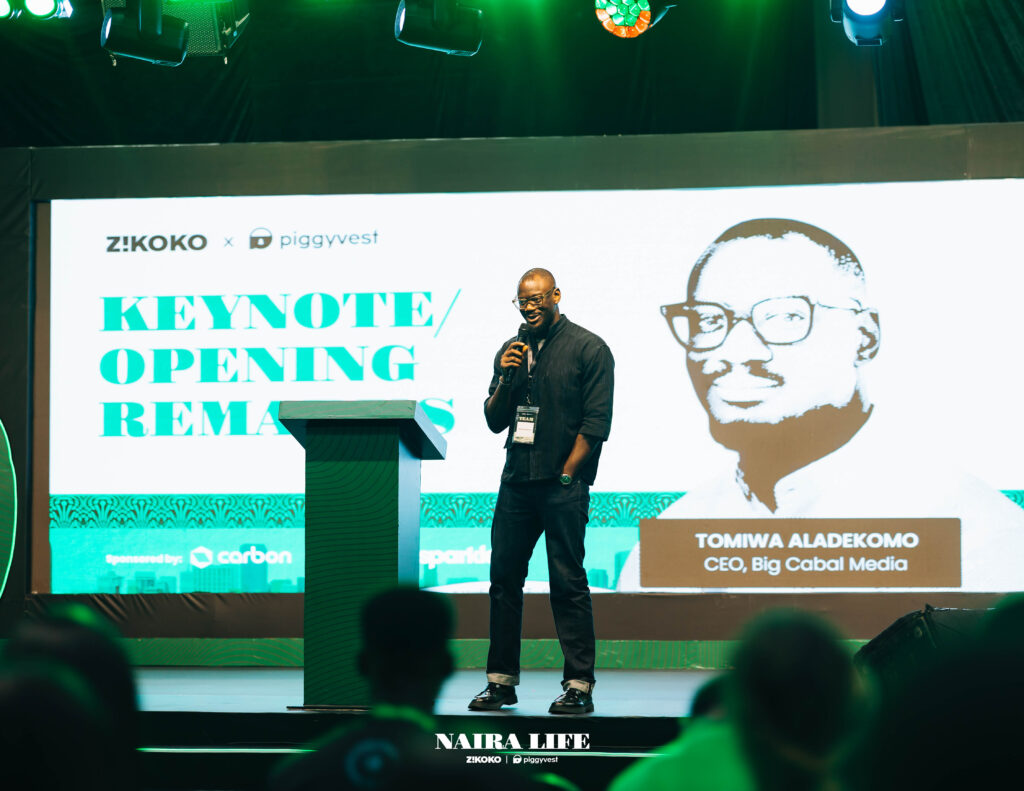
I’ve been following the Naira Life Series by Zikoko all year, reading unfiltered stories about how everyday Nigerians earn, spend and make their money work for them. So when I heard that Zikoko was hosting its flagship money event, The Naira Life Conference, I knew I had to attend.
Described as a space that cuts through the “hush culture” around money, the conference brought together wealth builders, entrepreneurs, financial leaders and young people like me for a full day of raw, practical conversations about money, careers, scaling businesses, and growing wealth.

On Friday, 8th of August, young Nigerians from different walks of life gathered for the Zikoko Naira Life Conference, a refreshing space where people talked honestly about money, how we make it, manage it, multiply it, and most importantly, how we feel about it.
The Truth is you have to invest in yourself or dream with your own money before convincing others to invest in it. Remi Martins
Unlike many “finance events” that feel sophisticated or intimidating, this one felt like a community conversation. From the Booths, to the breakout rooms, young people were openly sharing stories about financial wins, financial mistakes, and anxieties about building wealth in an unpredictable economy. There were conversations on saving, investing, financial transparency, self-funded businesses, and the importance of financial literacy in building a sustainable future.
It didn’t feel like a lecture. It felt like a reminder: you’re not alone on this money journey.
The session that resonated the most with me was titled “Impact over Everything: What it takes to work for social good” featuring Tunde Onakoya ( Chess in Slums Africa) and Remi Martins (Founder, Texture Science Labs).
They spoke about what it really takes to scale an idea from just passion into impact. Tunde talked about the early days of Chess in Slums and how he literally funded the work from showing up, physically and financially, not because it was convenient, but because it was his reality and he wanted to do something about it. Remi shared how investing in a multi-billion business often requires personal sacrifice and a long-term mindset.
The key message was clear:
Chess In Slum is not just about me anymore, we have grown to be an entity that has instructors, guardians and other individuals who have to be with the kids and train them overtime. Now, the major job for me has now be to bring in money, for this impact to continue, which is the biggest Job. Tunde Onokoya
Another powerful session for me was “The Business of Content: Understanding the Blueprint” with Joey Akan (Music Industry Strategist) and Toama ( Content Creator & Comedian)
They unpacked the reality that creativity alone isn’t enough to build a career, you need to understand the business of content. They talked about contracts, intellectual property, building systems, staying consistent, learning how to price value, and finding models that allow creatives to earn sustainably. As someone who operates in the civic/creative space, it was a necessary reminder that passion will open the door, but strategy keeps it open.
My International Youth Day Reflection
This year’s International Youth Day was a few days after the conference focused on youth empowerment. Strangely (but rightly), I found myself reflecting not just on influence or advocacy, but on money, how we manage it, use it, and grow it.

Being financially independent isn’t separate from doing meaningful work. In fact, it makes it possible.
That’s why conferences like the Zikoko Naira Life gathering are important. They don’t just teach formulas, they remind us to take money seriously. They wake us up. They remind us that we can build impact and still be intentional about wealth. They create a space where young people are not ashamed to say “I want to do good AND earn well.”
For me, the conference wasn’t just an event. It was a reset, a reminder to keep learning, manage my money better and believe that financial confidence is also part of youth development.
If we keep having conversations like this, then maybe doing good or being in the creative space won’t come at the cost of being broke. Maybe we really can build the future, sustainably.