
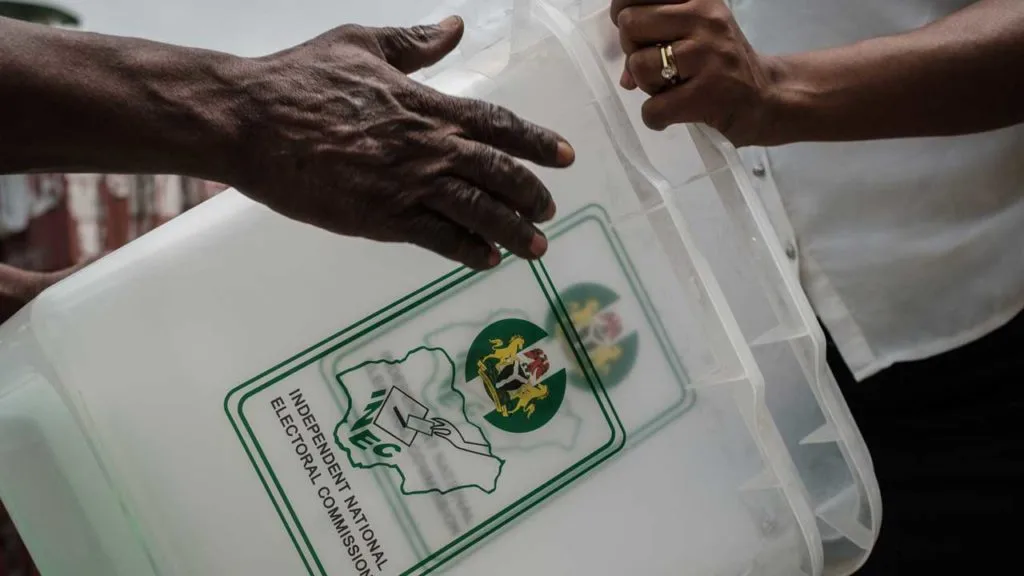
With the upcoming off-cycle Osun State governorship election in scheduled for August 15, 2026, the spotlight is shifting toward voter engagement and turnout expectations. Following the conclusion of the Continuous Voter Registration (CVR) exercise, the Independent National Electoral Commission (INEC) disclosed that approximately 2.3 million citizens are registered to vote.
Political parties have been cleared to contest in the election, where the incumbent governor, Ademola Adeleke, is campaigning for a second term. The election will take place across 30 local government areas, spanning 3,763 polling units.
At A Glance
| Election Date | August 15, 2026 |
| Total Registered Voters | 2,333,233 |
| Total LGAs | 30 |
| Total number of Wards | 332 |
| Total No of Polling Units | 3,763 |
Despite rising registration, voter turnout remains the main challenge. In the 2022 gubernatorial election, a record low of 42.09 percent of nearly two million registered voters cast ballots, meaning less than half the electorate decided an outcome impacting over five million people.
According to data released by INEC, Osogbo Local Government Area records the highest number of registered voters with 167,704. It is closely followed by Ife-East and Olorunda Local Government Areas, which have 128,515 and 123,063 voters, respectively. Other local governments with substantial voter registration include Ife-Central (122,454), Iwo (106,814), and Ede-North (96,644). Voter counts for Irewole and Ifelodun stand at 96,528 and 94,870, while Ilesa-East and Ilesa-West have 89,491 and 86,699 registered voters, respectively. Additionally, Oriade has 84,238, Odo-Otin has 82,574, and Boripe has 81,067.
On the other end of the spectrum, the three local government areas with the lowest voter registration are Atakumosa-West with 44,076, Boluwaduro with 29,797, and Ifedayo with 28,361.
Spotlight on Registered Voters (Top and Least 3 LGAs)
| LGA | No of Voters |
| Osogbo | 167,704 |
| Ife East | 128,515 |
| Olorunda | 123,063 |
| Atakumosa-West | 44,076 |
| Boluwaduro | 29,797 |
| Ifedayo | 28,361 |
Voter turnout measures democratic participation by reflecting the proportion of registered citizens who vote. Low turnout means a small segment of the population determines election outcomes, raising serious concerns about public engagement and true representation.
Historical Data
| Year | Registered Voters | Total Votes Cast | Voters Turnout Percentage |
| 2003 | 1,367,627 | 801,810 | 58.63% |
| 2014 | 1,407,222 | 750,020 | 53.30% |
| 2018 | 1,682,495 | 769,500 | 45.74% |
| 2022 | 1,955,657 | 823,124 | 42.09% |
*In the April 14, 2007 election, PDP’s Olagunsoye Oyinlola defeated ACN’s Rauf Aregbesola. Following a challenge, the Ibadan Appeal Court declared Aregbesola duly elected on November 26, 2010.
Osun governorship elections show consistently low voter turnout despite growing voter registration. Over the years, participation has experienced a steady decline, hitting 45.74% in 2018 and reaching a record low of 42.09% in 2022. Even though 2022 recorded the largest absolute counts of registered voters and total ballots cast, the relative turnout still dwindled.
Historical data shows voter registration increases in each election cycle while turnout declines. This is not peculiar to Osun State alone as seven other states; Anambra, Bayelsa, Edo, Ekiti, Imo, Kogi, and Ondo, also elect governors outside the regular cycle experienced a drop in turnout.
While the increase in registered voters suggests a growing interest in the democratic process, the persistent decline in actual turnout remains a critical hurdle. Ultimately, the widening gap between the number of citizens eligible to vote and those who actually exercise their franchise highlights a paradox in Nigeria’s electoral landscape.