
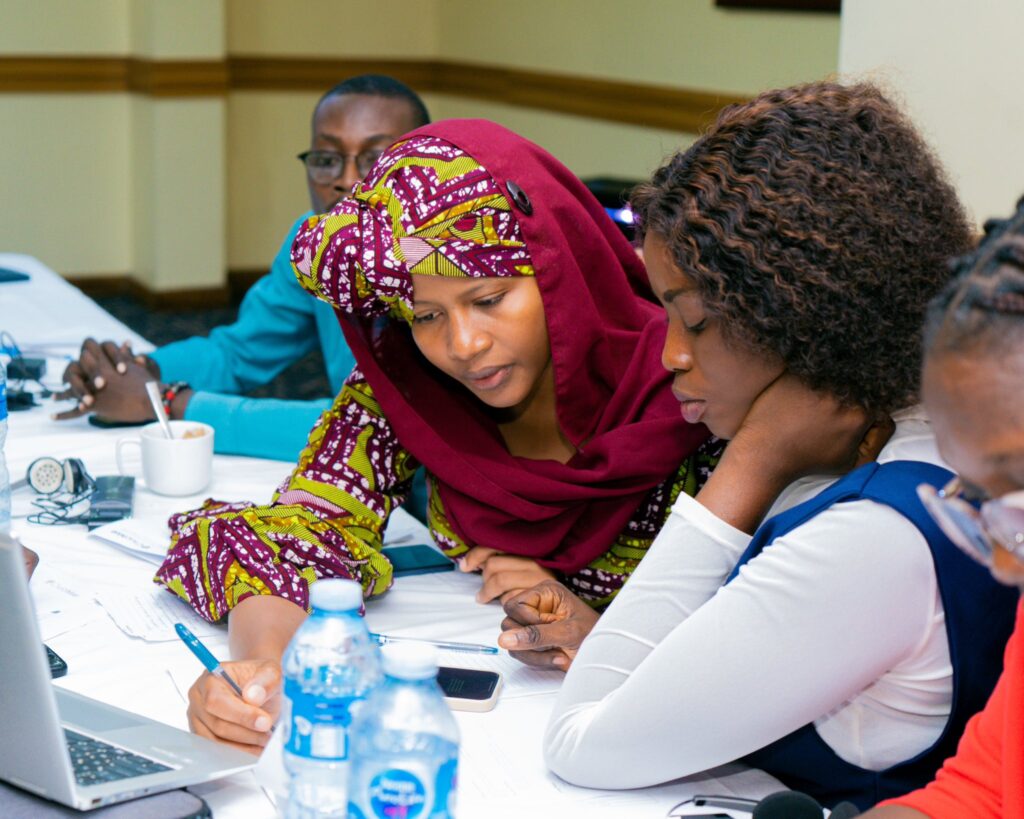
The West Africa Civic Tech Conference is a regional gathering that brings together civic technology practitioners, policymakers, and activists to reimagine how digital tools can deepen democracy, expand civic space, and empower citizens to shape governance.
At the heart of the conference is Hack4Democracy, a two-day civic-tech hackathon from the 19th – 20th of May at Colossus Hotel, Ikeja where innovators collaborate to reimagine solutions tackling voter apathy, misinformation, electoral fraud, and authoritarianism.
Day 1 set the tone with truth as its core theme, anchored by the gripping reflection sessions: “Democracy and the Crisis of Governance in West Africa”, led by Burkinabè researcher Souleymane Ouedraogo and Bukola Idowu. Their session was a jarring but necessary confrontation on the current state of democracy in both countries.
- Burkina Faso: The Crisis Behind the Curtain
One of the most revealing segments of the day reflected on the evolving reality in Burkina Faso between 2018 and 2025, a country caught in a recurring loop of military interventions, eroding democratic norms, and tightening civic space. Drawing from recent experiences in Burkina Faso, the session exposed how media orchestration is increasingly used as a political tool painting images of growth, reform, and stability, even as on-the-ground realities tell a different story.
- Despite claims of economic progress, GDP growth remains modest, with inflation straining everyday livelihoods.
- Announced social interventions and wage increases were either exaggerated or entirely unimplemented.
- Independent journalism and civic voices face severe repression, limiting space for accountability.
- Public debt has risen steeply, while sectors like education and healthcare continue to suffer neglect.
What emerged was a critical reflection, when governance becomes dependent on curated narratives rather than actual progress, democracy transforms into performance a spectacle meant to satisfy optics, not outcomes. This disparity between state communication and lived realities doesn’t just affect internal governance, it also distorts external assessments, leaving the international community misinformed about the true state of democracy.
Democracy is not just about holding elections. It is a living system built on truth, justice, and active citizenship. Without these, we are merely staging democracy, not practicing it. – Sulaymane
Another major highlight came later in the afternoon during the reflections session, where Bukola Idowu, Team Lead at Kimpact Development Initiative, shared piercing insights from the frontlines of Nigeria’s electoral space.

Why Electoral Literacy Matters
Bukola emphasized the importance of numbers not just in casting votes, but in understanding what makes an election valid. With data from Nigeria’s recent elections, he revealed:
- The number of invalid votes in the 2023 Presidential election exceeded valid votes in entire states like Abia, Ebonyi, and Bayelsa.
- Many citizens remain unaware of how vote cancellation, invalidation, and turnout rates affect election legitimacy.
- Political parties often fail to provide basic voter education, leaving gaps that civil society must scramble to fill.
When the Court Becomes King
Perhaps the most sobering takeaway from Bukola’s session was his commentary on the increasing judicialization of democracy:
In Nigeria, the court is no longer just a referee. It is now the decider of elections. The judiciary has been made a sort of god, not just interpreting results, but determining who governs. And that is dangerous.
He further highlighted how political parties have become both gatekeepers and saboteurs of democracy, often prioritizing internal power tussles and godfatherism over transparency and citizen engagement.

Civic Tech’s Role in the Fight for Democracy
Both sessions underscored the critical role civic tech must play in this decade: not just as a tool for data, but as a vehicle for truth.
- Fact-checking platforms, citizen journalism, and whistleblower tools can expose the disconnect between official statements and real-life conditions.
- Electoral education platforms must be scaled to equip citizens with the knowledge to protect their votes and their rights.
- Tech-enabled civic monitoring can reduce the judiciary’s monopoly by empowering voters with real-time, verifiable data.
Final Reflection: The Truth is Not Optional
As the room settled after both presentations, there was a sense of clarity and urgency. If democracy is to survive in West Africa, it must be protected from both external threats and internal decay. That means strengthening institutions, yes. But more importantly, it means empowering citizens with knowledge, tools, and truth.
The crisis is real. But so is the People
Download the West Africa Civic Tech Report to learn about how technology is making governance work for the people in West Africa.