
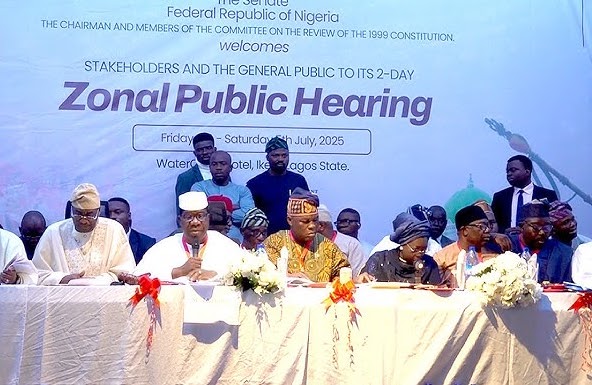
The Nigeria constitution is undergoing a series of amendments. Specifically, there are ongoing efforts to review and potentially amend the 1999 Constitution, with various bills being proposed and debated in the National Assembly. These amendments cover a wide range of issues, including judicial affairs, legislative restructuring, and gender representation.
Given that public hearings are integral to the constitutional amendment process, I represent our organization at the public hearing for the South West region.
- What are Public Hearings?
A public hearing is a formal legislative process where members of the public, stakeholders, civil society organizations, and experts are invited to express their views, arguments, and recommendations on a proposed bill or constitutional amendment. It is typically organized by a legislative committee either in the Senate or the House of Representatives, and serves as a platform for direct citizen engagement in the lawmaking process.
- Day 1: Women Participation & State Creation
On July 4th–5th, I attended my first-ever public hearing on amending the 1999 Constitution at Watercress Hotel, Ikeja. As part of the South-West Zonal Senate hearings, it was my chance to see participatory democracy in action.
The opening five hours were described by the sitting Chairman as “ceremonial” yet, it felt like a political theatre. The room was graced with Obas of the South West, including the Ooni of Ife and Alaafin of Oyo delegates; who entered in their full regalia, demanding for a constitutionally recognized role for traditional rulers. The symbolism was powerful and intentional highlighting their desire to reclaim a stake in national governance after being excluded since colonial times.
WATCH:Presentation of Reserved Seat Bill for Women
One of the most moving segments came from women leaders, who presented over 1 million signed petitions demanding reserved seats for women in all legislative bodies. This was more than a gesture, it was a bold assertion that inclusion isn’t an option; it’s a necessity.
Let’s not forget how the Ijebus filled the hall with drummers, chanters, and banners, demanding a creation of a new Ijebu State carved from Ogun State. Their presence infused the hearing with energy and reminded us that state-creation is not just administrative, it’s about identity, self-determination, and a sense of belonging.
- Day 2: Electoral Reforms & Others
Day 2 of the hearing also spotlighted critical electoral reforms, grounded in actual Senate bills under review. Some key proposals:
- Diaspora Voting (SB 255): Allow Nigerians abroad to vote in elections promoting equity and engagement beyond borders (sccr.gov.ng).
- Independent Candidacy (SB 812): Permit citizens to stand for office without political parties, a major shift toward choice and representation (sccr.gov.ng).
- State Electoral Commissions (SB 806): Grant state electoral bodies like LASEIC autonomy to run credible local and state-level elections (sccr.gov.ng).

Public hearings are essential in a democracy because they allow for transparency, inclusivity, and accountability in governance. They provide an opportunity for lawmakers to receive feedback, gauge public opinion, and refine legislative proposals to reflect the needs and concerns of the people they serve.
The amendment of a bill in Nigeria follows a structured legislative process, often referred to as the cycle of bill passage. Here is a breakdown of that cycle:
- First Reading: The bill is introduced to the legislative chamber (either the Senate or the House of Representatives) and read for the first time. No debate takes place at this stage.
- Second Reading: The general principles of the bill are debated. If it passes this stage, it is referred to the appropriate committee for further review.
- Committee Stage (Where Public Hearing Happens): This is where the bill is examined in detail. The committee conducts research, consults with stakeholders, and most importantly, holds a public hearing. The public hearing allows citizens and interest groups to make presentations, contribute ideas, and raise concerns about the bill. The committee then compiles a report based on these inputs.
- Third Reading: The final version of the bill, often revised based on feedback from the committee stage, is presented and debated. If passed, it moves to the other chamber of the National Assembly (Senate or House).
- Repeat Process in the Second Chamber: The second chamber goes through the same stages. first reading, second reading, committee stage (which may include another public hearing), and third reading.
- Harmonization: If there are differences between the versions passed by the two chambers, a conference committee is set up to harmonize the bill.
- Presidential Assent: Once both chambers pass the harmonized version, the bill is sent to the President for assent. Upon approval, it becomes law.
Why It Matters: For You and For Me
Attending as a young Nigerian, I realized constitutional reform isn’t dry policy, it’s about shaping the future.
As an attendee, I saw democracy unfold not in votes, but in voices. While I was encouraged to see some youth-led NGOs in the room, it was impossible not to notice how underrepresented youth voices were overall. The presence was minimal, and even more telling, the public hearing event didn’t trend among the social media platforms where youths dominate.
So here’s my final reflection and challenge: If we don’t get involved in democratic activities like this as young people; even just as observers, how do we expect to become the forerunners of policy and the changemakers we aspire to be?